Expanded Case Study
From Digital Platform to Coherent System
What you see in the Exhibits is the current framework.
What you’ll find here is the documented evolution that helped produce it.
Built. Measured. Refined. Preserved.
Expanded Case Study
From Digital Platform to Coherent System
What you see in the Exhibits is the current framework.
What you’ll find here is the documented evolution that helped produce it.
Built. Measured. Refined. Preserved.
From Vision to System
This page traces the evolution of an idea into a working digital system—and the systems thinking that emerged from building it.
What began as the design of a digital platform gradually became something broader.
Messaging had to connect to structure. Structure had to support discoverability. Automation had to preserve context. Experience had to reflect intent. Measurement had to inform what happened next.
As those relationships became clearer, the project moved beyond the optimization of individual pages or tools and toward the design of a coordinated digital environment.
What follows documents that evolution: from implementation, to observation, to framework.
────────────────────────
This page traces the evolution of an idea into a working digital system—and the systems thinking that emerged from building it.
What began as the design of a digital platform gradually became something broader.
Messaging had to connect to structure. Structure had to support discoverability. Automation had to preserve context. Experience had to reflect intent. Measurement had to inform what happened next.
As those relationships became clearer, the project moved beyond the optimization of individual pages or tools and toward the design of a coordinated digital environment.
What follows documents that evolution: from implementation, to observation, to framework.
────────────────────────
Digital Narrative Infrastructure Model
A framework for designing digital environments where messaging, information, automation, experience, and operational reality function as parts of a coherent system.
Digital systems rarely fail because of a single component.
More often, breakdown occurs when communication, content structure, search visibility, automation, interface behavior, and operational systems evolve independently.
The challenge has only become more important as digital environments are increasingly interpreted not only by people, but by search engines, AI systems, platforms, and autonomous software.
The Digital Narrative Infrastructure Model explores a different approach.
Instead of treating these capabilities as separate disciplines, it examines how they can operate as interconnected layers of a single digital architecture.
────────────────────────
A framework for designing digital environments where messaging, information, automation, experience, and operational reality function as parts of a coherent system.
Digital systems rarely fail because of a single component.
More often, breakdown occurs when communication, content structure, search visibility, automation, interface behavior, and operational systems evolve independently.
The challenge has only become more important as digital environments are increasingly interpreted not only by people, but by search engines, AI systems, platforms, and autonomous software.
The Digital Narrative Infrastructure Model explores a different approach.
Instead of treating these capabilities as separate disciplines, it examines how they can operate as interconnected layers of a single digital architecture.
────────────────────────
Governing Principle
Digital systems perform best when meaning, discoverability, automation, experience, and operational reality remain aligned.
Changes made within one layer influence the others.
Strong messaging without discoverability may remain unseen.
Discoverability without clear meaning can create visibility without understanding.
Automation without context can accelerate the wrong action.
Experience without operational integrity can promise what the underlying system cannot reliably deliver.
Coherence comes from designing the relationships between these layers—not simply improving each one independently.
────────
ARCHITECTURE
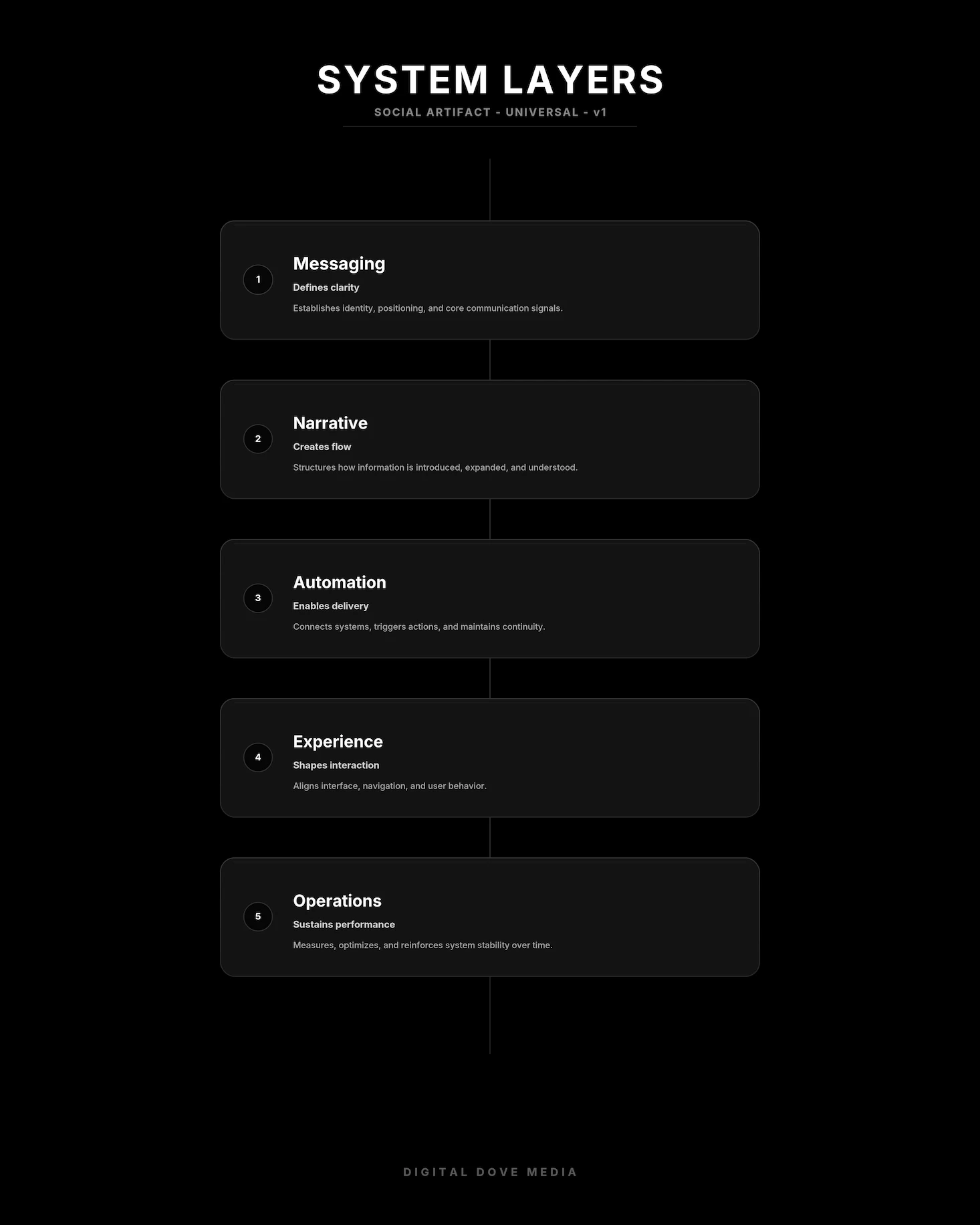

An Earlier View of the System
The architecture shown here documents an earlier stage in the development of the Digital Narrative Infrastructure Model.
At this stage, the system was expressed through five interconnected layers: Messaging, Narrative, Automation, Experience, and Operations.
That model established an important principle that remains intact today:
no meaningful digital layer operates in isolation.
As the work expanded, narrative architecture increasingly became part of a broader information and discoverability discipline, while operations evolved toward the deeper concept of alignment between what a digital environment communicates, what its systems know, and what they are actually capable of doing.
The terminology evolved.
The principle did not.
An Earlier View of the System
The architecture shown here documents an earlier stage in the development of the Digital Narrative Infrastructure Model.
At this stage, the system was expressed through five interconnected layers: Messaging, Narrative, Automation, Experience, and Operations.
That model established an important principle that remains intact today:
no meaningful digital layer operates in isolation.
As the work expanded, narrative architecture increasingly became part of a broader information and discoverability discipline, while operations evolved toward the deeper concept of alignment between what a digital environment communicates, what its systems know, and what they are actually capable of doing.
The terminology evolved.
The principle did not.
The Evolved System Layers
The framework has evolved from a sequence of digital disciplines into a set of interconnected system layers. Each addresses a different dimension of the environment, while remaining dependent on the coherence of the whole.
No layer stands alone. Each shapes what the others can communicate, understand, execute, and sustain.
Messaging
Establishes meaning, identity, positioning, claims, and communication clarity across the environment.
Discoverability
Structures information so people, search engines, AI systems, and other machine intermediaries can find, interpret, retrieve, and represent it accurately.
Automation
Moves information and authorized actions through workflows while preserving context, continuity, and operational intent.
Experience
Shapes how information, choices, interactions, and system capabilities are encountered across human and machine touchpoints.
Alignment
Keeps communication, information, capability, execution, measurement, and operational reality working from the same coherent system state.
When these layers reinforce one another, the digital environment becomes more understandable, more reliable, and more capable of adapting without losing coherence.
────────
Messaging
Establishes meaning, identity, positioning, claims, and communication clarity across the environment.
Discoverability
Structures information so people, search engines, AI systems, and other machine intermediaries can find, interpret, retrieve, and represent it accurately.
Automation
Moves information and authorized actions through workflows while preserving context, continuity, and operational intent.
Experience
Shapes how information, choices, interactions, and system capabilities are encountered across human and machine touchpoints.
Alignment
Keeps communication, information, capability, execution, measurement, and operational reality working from the same coherent system state.
When these layers reinforce one another, the digital environment becomes more understandable, more reliable, and more capable of adapting without losing coherence.
────────
Messaging
Establishes meaning, identity, positioning, claims, and communication clarity across the environment.
Discoverability
Structures information so people, search engines, AI systems, and other machine intermediaries can find, interpret, retrieve, and represent it accurately.
Automation
Moves information and authorized actions through workflows while preserving context, continuity, and operational intent.
Experience
Shapes how information, choices, interactions, and system capabilities are encountered across human and machine touchpoints.
Alignment
Keeps communication, information, capability, execution, measurement, and operational reality working from the same coherent system state.
When these layers reinforce one another, the digital environment becomes more understandable, more reliable, and more capable of adapting without losing coherence.
────────
System Implications
•Messaging clarity strengthens understanding and positioning.
• Discoverability determines whether that meaning can be found and interpreted.
• Automation translates intent into repeatable action.
• Experience determines how that system is encountered and understood.
• Alignment keeps what is communicated consistent with what the system can actually support.
────────
System Implications
•Messaging clarity strengthens understanding and positioning.
• Discoverability determines whether that meaning can be found and interpreted.
• Automation translates intent into repeatable action.
• Experience determines how that system is encountered and understood.
• Alignment keeps what is communicated consistent with what the system can actually support.
────────
Caption
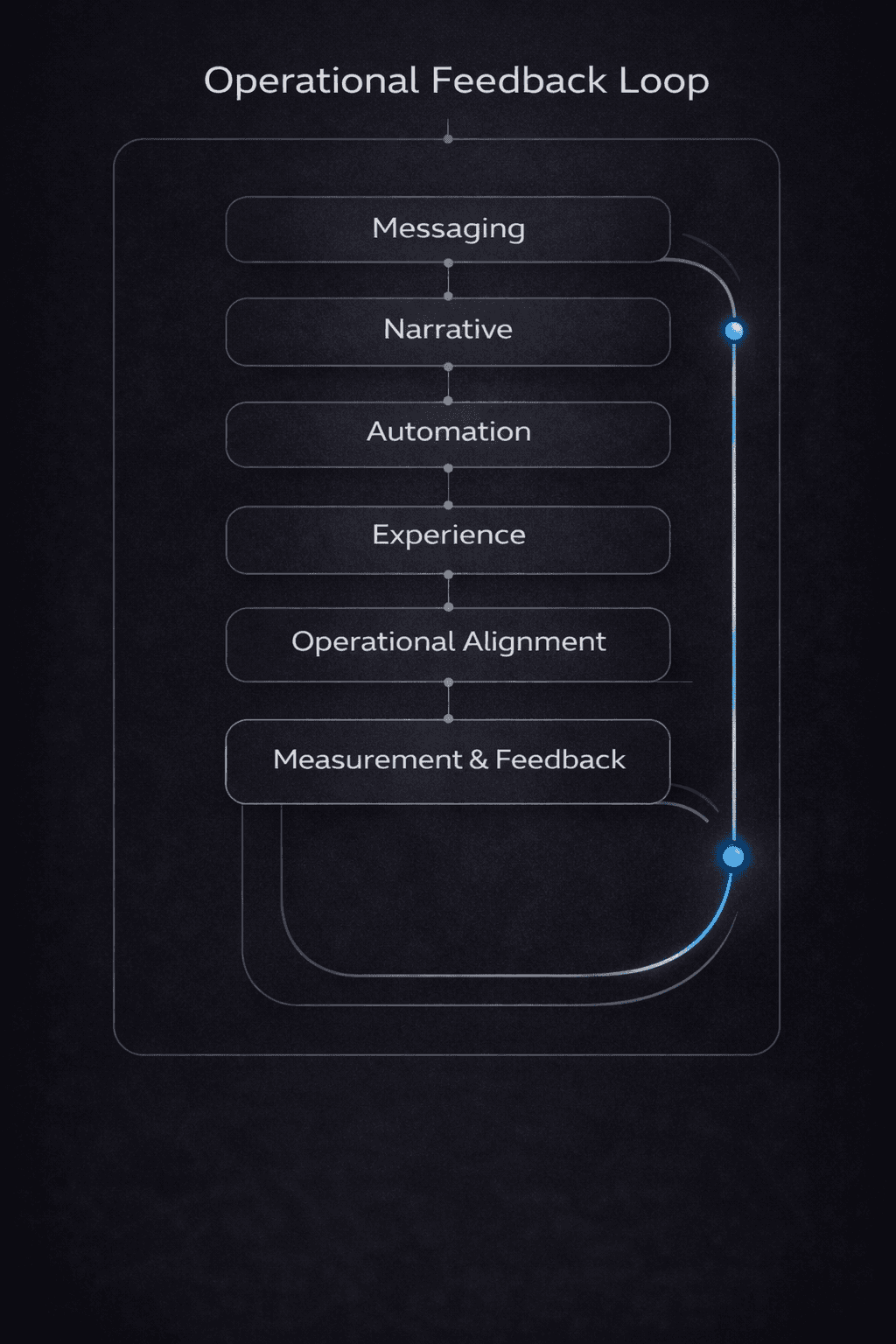
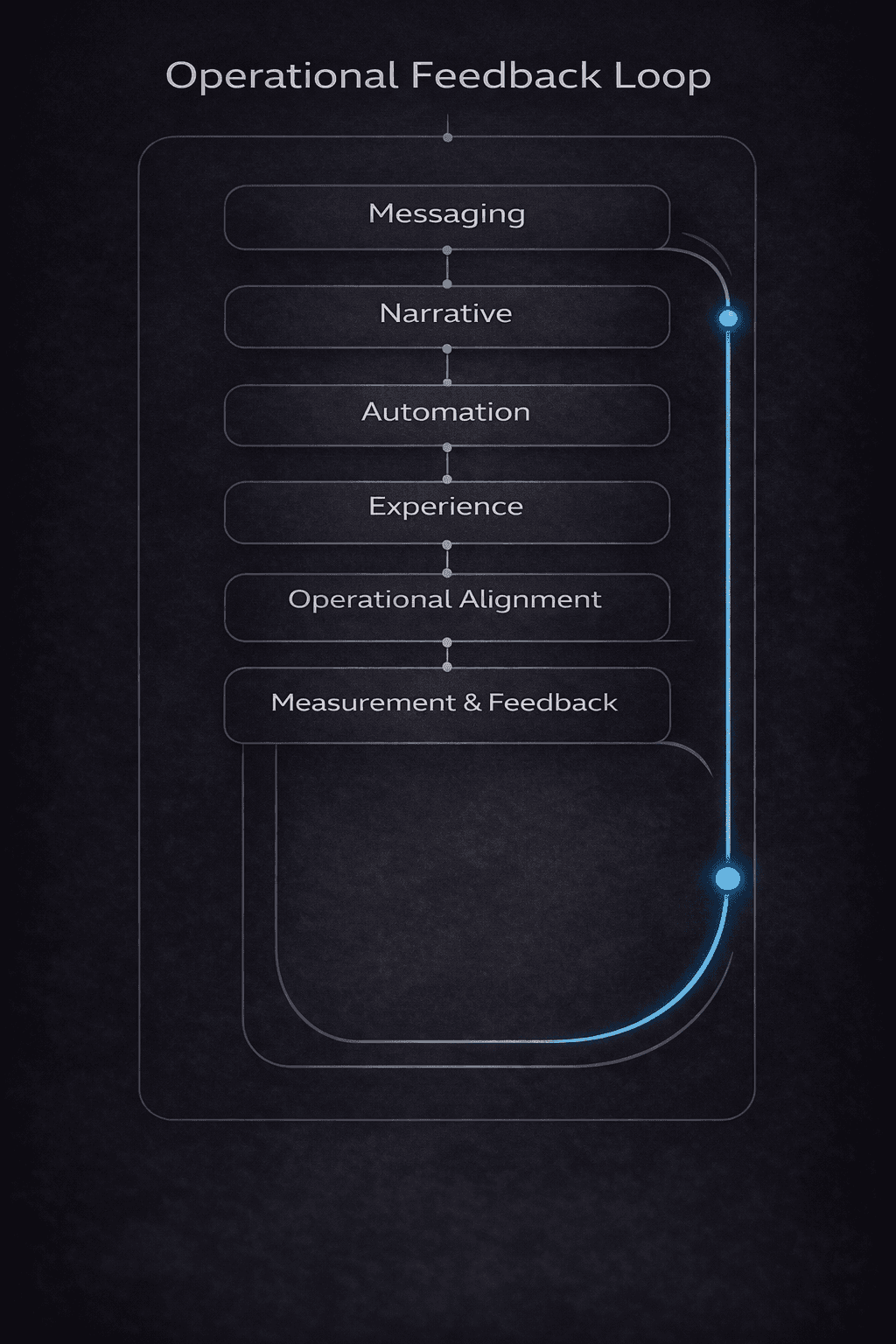
Performance insights flow back through each layer of the system, allowing messaging, narrative structure, automation infrastructure, and interface behavior to evolve through continuous measurement and refinement.
────────
Operational Feedback Loop
Measurement does not sit at the end of the system.
Behavioral signals, search visibility, system performance, operational outcomes, and other evidence feed back into the architecture, revealing where assumptions remain valid and where refinement is required.
That information can influence messaging, information structure, automation, experience, and operational configuration.
The system therefore evolves through evidence rather than arbitrary change.
Observe. Evaluate. Refine. Revalidate.
────────
Operational Feedback Loop
Measurement does not sit at the end of the system.
Behavioral signals, search visibility, system performance, operational outcomes, and other evidence feed back into the architecture, revealing where assumptions remain valid and where refinement is required.
That information can influence messaging, information structure, automation, experience, and operational configuration.
The system therefore evolves through evidence rather than arbitrary change.
Observe. Evaluate. Refine. Revalidate.
────────
Operational Feedback Loop
Measurement does not sit at the end of the system.
Behavioral signals, search visibility, system performance, operational outcomes, and other evidence feed back into the architecture, revealing where assumptions remain valid and where refinement is required.
That information can influence messaging, information structure, automation, experience, and operational configuration.
The system therefore evolves through evidence rather than arbitrary change.
Observe. Evaluate. Refine. Revalidate.
────────
METHOD
METHOD
System Diagnostic Summary
System Diagnostic Summary
System Diagnostic Summary
Caption
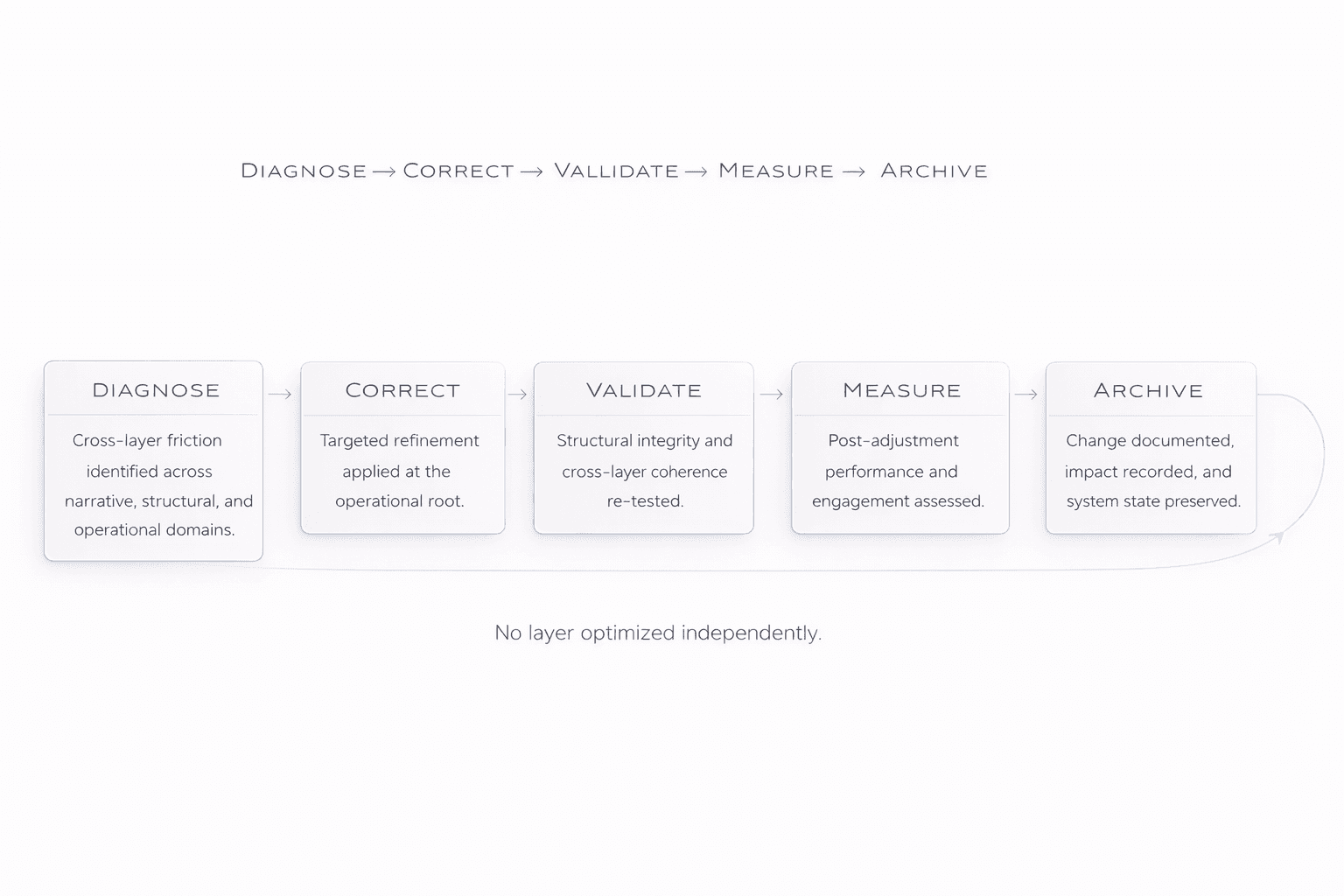
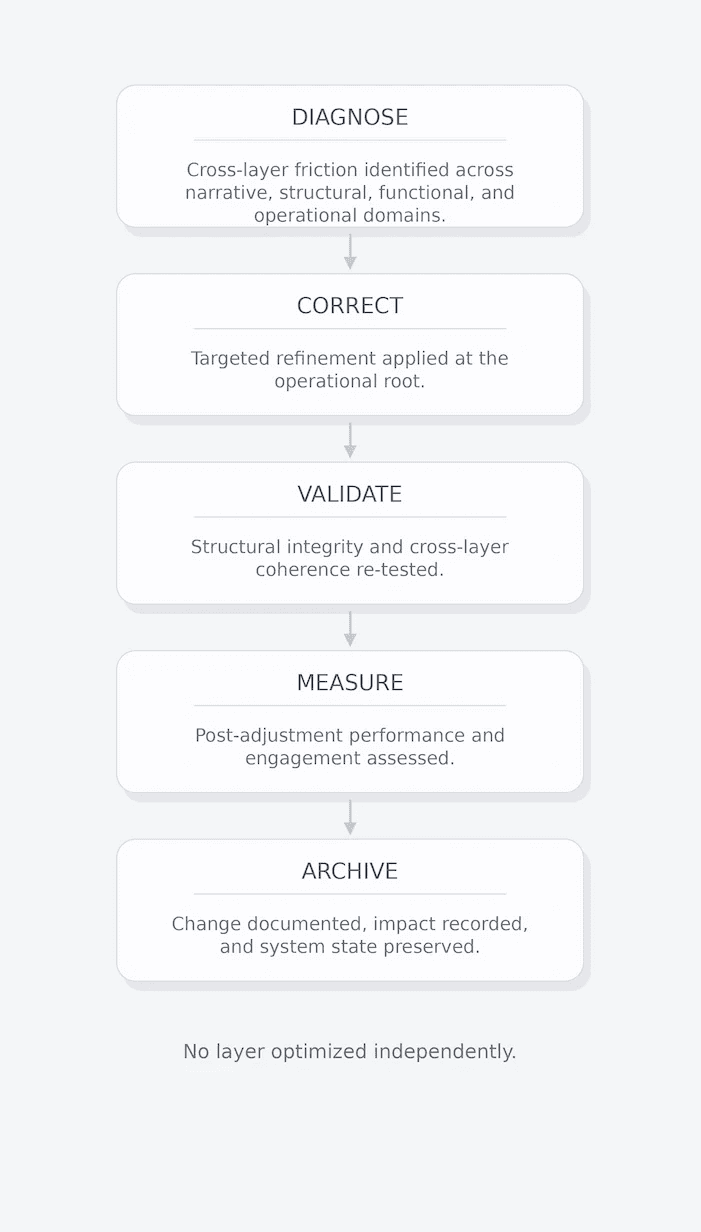
The architecture documented in this portfolio was developed through a structured diagnostic process designed to preserve coherence across the system..
.
────────────────────────
Caption
The architecture documented in this portfolio was developed through a structured diagnostic process designed to preserve coherence across the system..
.
────────────────────────
Caption
The architecture documented in this portfolio was developed through a structured diagnostic process designed to preserve coherence across the system..
.
────────────────────────
Rather than optimizing individual components in isolation, changes were evaluated according to their effects on communication, structure, discoverability, interface behavior, automation, performance, and operational continuity.
────────────────────────
Rather than optimizing individual components in isolation, changes were evaluated according to their effects on communication, structure, discoverability, interface behavior, automation, performance, and operational continuity.
────────────────────────
Rather than optimizing individual components in isolation, changes were evaluated according to their effects on communication, structure, discoverability, interface behavior, automation, performance, and operational continuity.
────────────────────────
Diagnose
Identify friction, contradiction, failure, or opportunity across system layers.
Correct
Address the underlying cause rather than treating only the visible symptom.
Validate
Re-test the affected layer and its relationships with the surrounding system.
Measure
Observe technical, behavioral, discoverability, and operational signals following the change.
Archive
Document significant changes, decisions, and outcomes so the evolution of the system remains traceable.
No layer was optimized independently.
────────────────────────
Diagnose
Identify friction, contradiction, failure, or opportunity across system layers.
Correct
Address the underlying cause rather than treating only the visible symptom.
Validate
Re-test the affected layer and its relationships with the surrounding system.
Measure
Observe technical, behavioral, discoverability, and operational signals following the change.
Archive
Document significant changes, decisions, and outcomes so the evolution of the system remains traceable.
No layer was optimized independently.
────────────────────────
Architecture Layer
Architecture Layer
A Fully Integrated Digital Environment
Digital Dove Media became a working systems laboratory in which a complete digital environment could be designed, implemented, measured, refined, and documented.
It was not simply a collection of webpages.
The environment connected messaging and information architecture, search and crawl infrastructure, automation and lifecycle logic, interface design, performance engineering, commerce, analytics, and operational documentation.
Each capability could be examined independently.
But its real value emerged from the relationships between them.
Nothing was isolated.
Nothing was accidental.
The objective was clarity, reliability, adaptability, and measurable performance.
Every meaningful integration could be examined.
Every major refinement could be documented.
Every layer influenced the larger system.
────────────────────────
Digital Dove Media became a working systems laboratory in which a complete digital environment could be designed, implemented, measured, refined, and documented.
It was not simply a collection of webpages.
The environment connected messaging and information architecture, search and crawl infrastructure, automation and lifecycle logic, interface design, performance engineering, commerce, analytics, and operational documentation.
Each capability could be examined independently.
But its real value emerged from the relationships between them.
Nothing was isolated.
Nothing was accidental.
The objective was clarity, reliability, adaptability, and measurable performance.
Every meaningful integration could be examined.
Every major refinement could be documented.
Every layer influenced the larger system.
────────────────────────
Foundation Layer
Foundation Layer
Experience and Infrastructure Were Architected Together
Before layout, tooling, or automation decisions were finalized, audience intent, communication progression, system behavior, and measurement strategy were considered together.
The original implementation examined two parallel forms of progression:
External Progression
what the user encountered and did.
Internal Progression
how understanding, context, confidence, and intent developed along the way.
Messaging hierarchy, experiential pacing, interface behavior, and technical instrumentation were therefore not independent concerns.
Experience influenced infrastructure.
Infrastructure constrained experience.
Both had to support the same underlying intent.
They were architected together.
They were architected together.
Before layout, tooling, or automation decisions were finalized, audience intent, communication progression, system behavior, and measurement strategy were considered together.
The original implementation examined two parallel forms of progression:
External Progression
what the user encountered and did.
Internal Progression
how understanding, context, confidence, and intent developed along the way.
Messaging hierarchy, experiential pacing, interface behavior, and technical instrumentation were therefore not independent concerns.
Experience influenced infrastructure.
Infrastructure constrained experience.
Both had to support the same underlying intent.
They were architected together.
They were architected together.
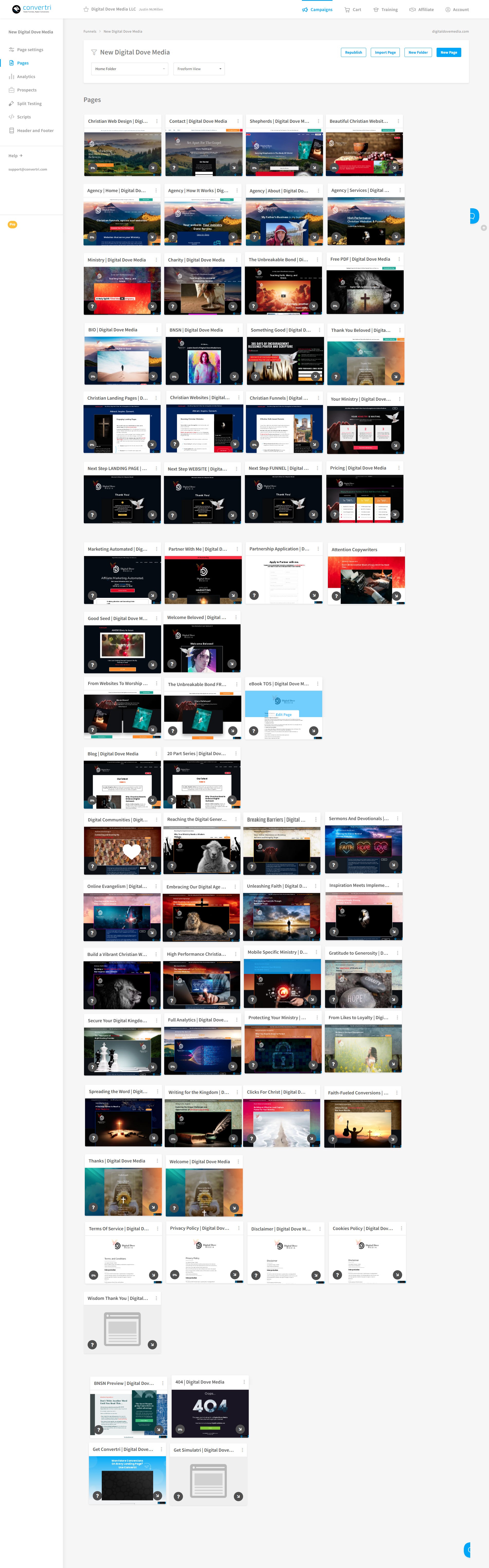

Example of how the narrative architecture translated into the live interface experience.
────────────────────────
Narrative and experience planning mapped internal and external user progression before layout or interface development began.
Narrative and experience planning mapped internal and external user progression before layout or interface development began.

Example of how the narrative architecture translated into the live interface experience.
────────────────────────
Example of how the narrative architecture translated into the live interface experience.
────────────────────────
Before interface or automation decisions could be effective, the system needed to establish what it meant, what it communicated, and how that meaning unfolded.
Messaging architecture provided that foundation.
Positioning, thematic hierarchy, narrative progression, calls to action, and supporting content were structured so individual pages could participate in a larger communication environment.
The lesson extended beyond copywriting:
A system cannot reliably communicate, surface, automate, or act on meaning that has never been clearly established.
────────────────────────
Enter Messaging Architecture →
Discoverability Layer
Discoverability Layer
Structural Clarity Before Optimization
Discoverability was treated as part of the architecture rather than a post-launch marketing activity.
Messaging clarity was reinforced through semantic structure, heading hierarchy, metadata, internal relationships, canonical stability, crawl integrity, and indexability.
The documented implementation included improvements to:
• H1–H3 semantic hierarchy
• Metadata alignment
• Internal linking
• Canonical configuration
• Clean XML sitemap submission
• Crawl integrity
• and Indexability.
Those changes produced measurable improvements within the implementation documented here.
They retain the existing numbers:
Ubersuggest Audit Score:
67 → 99
Indexed Pages:
4 → 32
Broken Links:
11 → 0
404 Errors:
6 → 0
Discoverability improves when technical structure and semantic clarity reinforce one another.
That principle now extends beyond traditional search.
Modern digital information must increasingly be structured so search engines, retrieval systems, AI interfaces, and other machine intermediaries can accurately identify what something is, understand its relationships, and determine whether it is relevant.
Discoverability is no longer only about being indexed.
It is increasingly about being understood.
Discoverability was treated as part of the architecture rather than a post-launch marketing activity.
Messaging clarity was reinforced through semantic structure, heading hierarchy, metadata, internal relationships, canonical stability, crawl integrity, and indexability.
The documented implementation included improvements to:
• H1–H3 semantic hierarchy
• Metadata alignment
• Internal linking
• Canonical configuration
• Clean XML sitemap submission
• Crawl integrity
• and Indexability.
Those changes produced measurable improvements within the implementation documented here.
They retain the existing numbers:
Ubersuggest Audit Score:
67 → 99
Indexed Pages:
4 → 32
Broken Links:
11 → 0
404 Errors:
6 → 0
Discoverability improves when technical structure and semantic clarity reinforce one another.
That principle now extends beyond traditional search.
Modern digital information must increasingly be structured so search engines, retrieval systems, AI interfaces, and other machine intermediaries can accurately identify what something is, understand its relationships, and determine whether it is relevant.
Discoverability is no longer only about being indexed.
It is increasingly about being understood.
The following exhibit documents the structural refinements that strengthened discoverability, crawl stability, and indexed visibility across the system.
────────────────────────
Enter Discoverability Framework →
Interface Expression Layer
Interface Expression Layer
Designed for Clarity, Continuity, and Context
Interface design translated information architecture into an environment people could actually navigate and understand.
Layout, typography, spacing, hierarchy, interaction, and responsive behavior were designed to reduce friction while preserving continuity across the experience.
Semantic hierarchy, alt-text standards, and descriptive labeling were integrated during build, not patched post-launch.
The system emphasized clarity over novelty.
Performance was part of that experience.
The implementation documented here produced:
PageSpeed Insights scores consistently measured
96–100
across
Performance • Accessibility • Best Practices • SEO
Alongside significant reductions in load time.
Desktop:
3.0s → 1.8s
Mobile:
5.0s → 2.6s
Fast pages alone do not create good experiences.
Neither do attractive interfaces.
Experience emerges from the relationship between information, context, interaction, performance, capability, and expectation.
And increasingly, those experiences are not limited to traditional webpages.
Digital environments are being encountered through search results, AI answers, agents, interfaces, messaging systems, commerce platforms, and other mediated touchpoints.
The experience therefore extends beyond the screen.
(The experience was choreographed—not decorated.)
Interface design translated information architecture into an environment people could actually navigate and understand.
Layout, typography, spacing, hierarchy, interaction, and responsive behavior were designed to reduce friction while preserving continuity across the experience.
Semantic hierarchy, alt-text standards, and descriptive labeling were integrated during build, not patched post-launch.
The system emphasized clarity over novelty.
Performance was part of that experience.
The implementation documented here produced:
PageSpeed Insights scores consistently measured
96–100
across
Performance • Accessibility • Best Practices • SEO
Alongside significant reductions in load time.
Desktop:
3.0s → 1.8s
Mobile:
5.0s → 2.6s
Fast pages alone do not create good experiences.
Neither do attractive interfaces.
Experience emerges from the relationship between information, context, interaction, performance, capability, and expectation.
And increasingly, those experiences are not limited to traditional webpages.
Digital environments are being encountered through search results, AI answers, agents, interfaces, messaging systems, commerce platforms, and other mediated touchpoints.
The experience therefore extends beyond the screen.
(The experience was choreographed—not decorated.)
The following exhibit shows how narrative structure was translated into interface pacing, visual hierarchy, and experiential flow.
────────────────────────
Enter Experience Storyboard →
Automation Layer
Automation Layer
Structured Pathways from Intent to Action
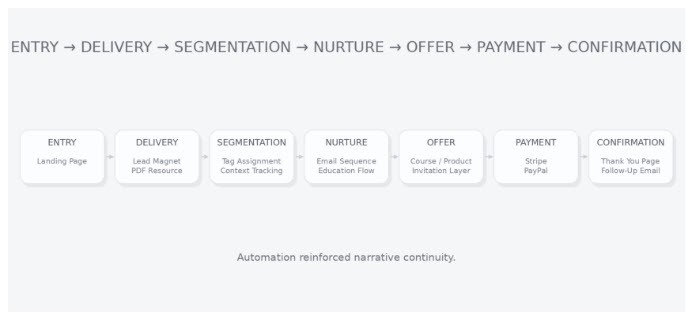
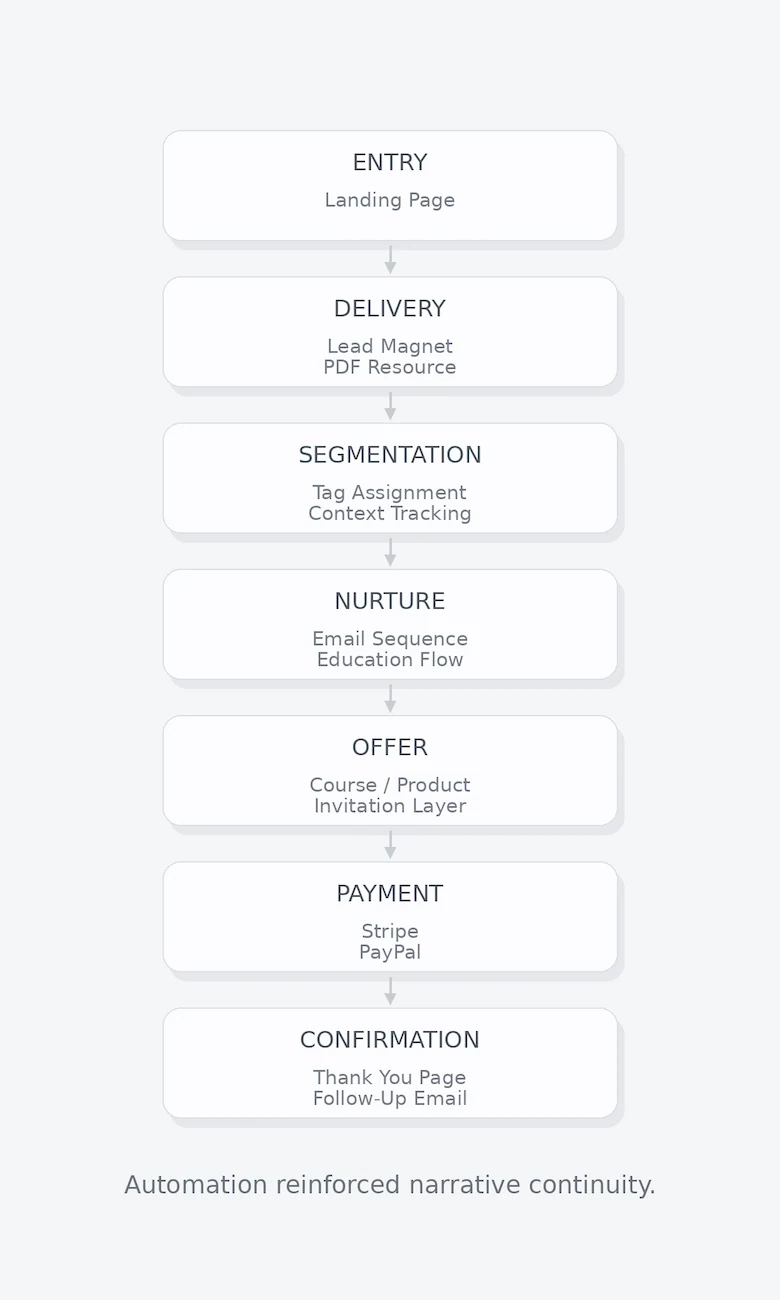
The original system used automation to connect entry points, resource delivery, segmentation, follow-up, offers, transactions, and confirmation.
The important lesson was not the tooling.
It was the relationship between context and action.
Automation worked best when the system understood where someone entered, what had occurred, what should happen next, and what conditions had to remain true.
That principle becomes even more important as digital systems move from simple triggers and workflows toward AI-assisted and increasingly agentic execution.
Automation should not merely make things happen faster.
It should help the right action occur within the right context.
Frontend capture, lifecycle logic, transactions, analytics, and delivery therefore function as parts of the larger system rather than disconnected automations.
Function should reinforce meaning—not outrun it.
The original system used automation to connect entry points, resource delivery, segmentation, follow-up, offers, transactions, and confirmation.
The important lesson was not the tooling.
It was the relationship between context and action.
Automation worked best when the system understood where someone entered, what had occurred, what should happen next, and what conditions had to remain true.
That principle becomes even more important as digital systems move from simple triggers and workflows toward AI-assisted and increasingly agentic execution.
Automation should not merely make things happen faster.
It should help the right action occur within the right context.
Frontend capture, lifecycle logic, transactions, analytics, and delivery therefore function as parts of the larger system rather than disconnected automations.
Function should reinforce meaning—not outrun it.
Caption
Automation infrastructure supports narrative continuity by guiding users through structured stages of delivery, segmentation, education, and conversion.
────────────────────────
Caption
Automation infrastructure supports narrative continuity by guiding users through structured stages of delivery, segmentation, education, and conversion.
────────────────────────
The following exhibit examines how narrative continuity was preserved through backend sequencing, segmentation, and automation logic.
────────────────────────
Enter Funnel & Automation Logic →
Operational Feedback Layer
Operational Feedback Layer
Measured. Adjusted. Refined.
The system was not launched and left untouched.
Performance, traffic behavior, engagement, discoverability, device behavior, conversion pathways, technical integrity, and operational signals were observed over time.
Analytics instrumentation provided visibility into:
• Traffic behavior
• Engagement discoverability
• Device behavior
• Conversion pathways
• Technical integrity
Adjustments were made deliberately.
The objective was not perpetual optimization for its own sake.
It was to determine whether the system continued to perform according to its intended purpose.
Measurement informed refinement.
Refinement required revalidation.
And improvements made in one area were evaluated for their effects elsewhere.
Optimization supported coherence.
Coherence supported durability.
────────────────────────
The system was not launched and left untouched.
Performance, traffic behavior, engagement, discoverability, device behavior, conversion pathways, technical integrity, and operational signals were observed over time.
Analytics instrumentation provided visibility into:
• Traffic behavior
• Engagement discoverability
• Device behavior
• Conversion pathways
• Technical integrity
Adjustments were made deliberately.
The objective was not perpetual optimization for its own sake.
It was to determine whether the system continued to perform according to its intended purpose.
Measurement informed refinement.
Refinement required revalidation.
And improvements made in one area were evaluated for their effects elsewhere.
Optimization supported coherence.
Coherence supported durability.
────────────────────────
The system was not launched and left untouched.
Performance, traffic behavior, engagement, discoverability, device behavior, conversion pathways, technical integrity, and operational signals were observed over time.
Analytics instrumentation provided visibility into:
• Traffic behavior
• Engagement discoverability
• Device behavior
• Conversion pathways
• Technical integrity
Adjustments were made deliberately.
The objective was not perpetual optimization for its own sake.
It was to determine whether the system continued to perform according to its intended purpose.
Measurement informed refinement.
Refinement required revalidation.
And improvements made in one area were evaluated for their effects elsewhere.
Optimization supported coherence.
Coherence supported durability.
────────────────────────


Caption
Discoverability analysis identified structural and semantic opportunities that informed search optimization and long-term content positioning.
────────────────────────
Caption
Discoverability analysis identified structural and semantic opportunities that informed search optimization and long-term content positioning.
────────────────────────
Caption
Discoverability analysis identified structural and semantic opportunities that informed search optimization and long-term content positioning.
────────────────────────
Alignment Layer
Alignment Layer
The System Has to Agree With Itself
A digital environment can appear polished at the surface while remaining fragmented underneath. Messaging can make promises that operations are not prepared to fulfill. Search can continue surfacing information that has become incomplete or outdated. Automation can execute against assumptions that no longer match the current state of the business. An interface can present choices that the underlying systems cannot reliably support.
These are not isolated failures.
They are alignment failures.
Alignment examines whether the major layers of the digital environment continue to describe and support the same underlying reality. Messaging establishes what is being communicated. Discoverability determines how that information is structured, surfaced, and interpreted. Automation carries information and intent into action. Experience determines how those capabilities are encountered. Operations determine what the organization and its systems can actually sustain.
When those layers drift apart, the system begins contradicting itself.
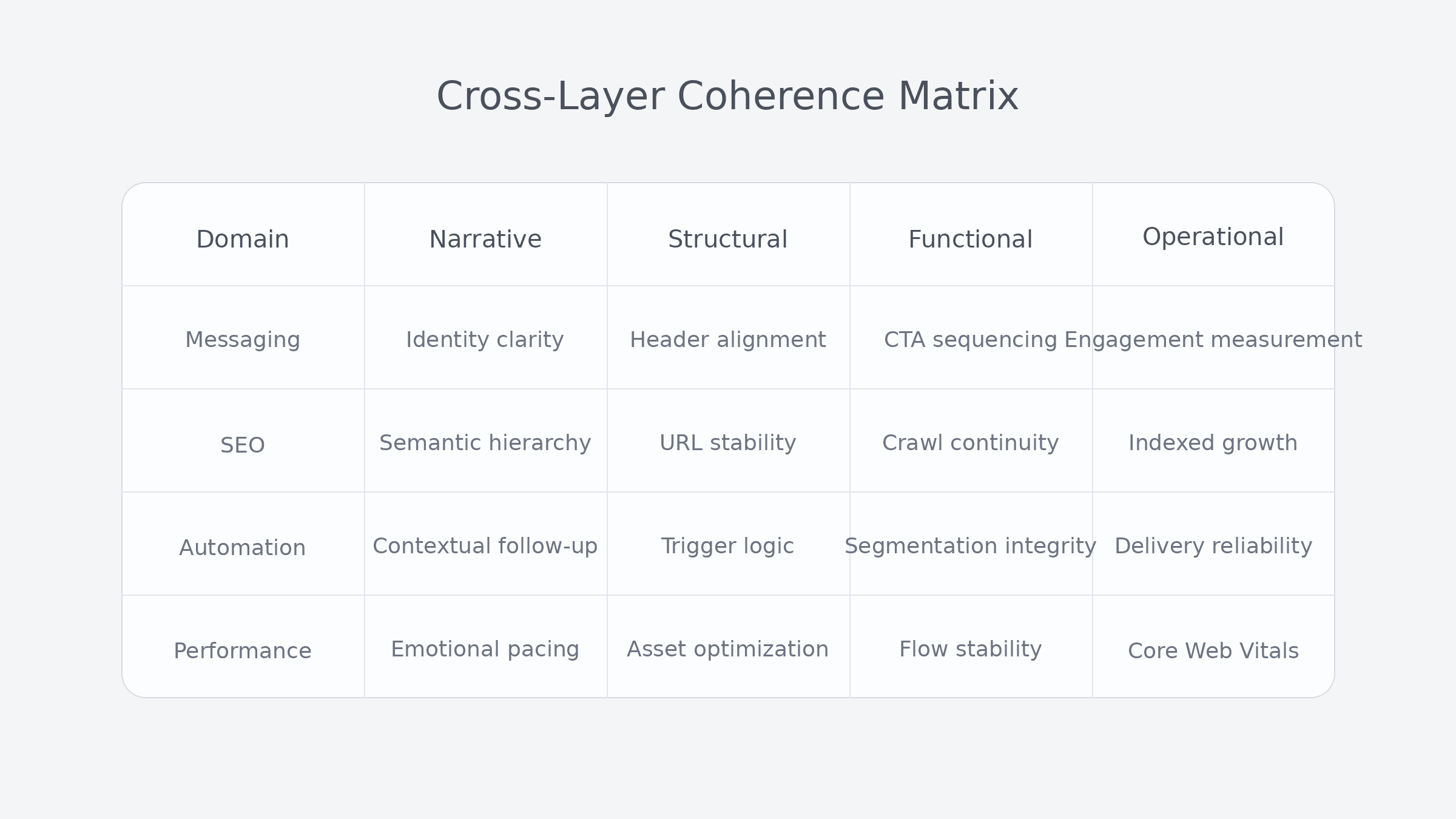
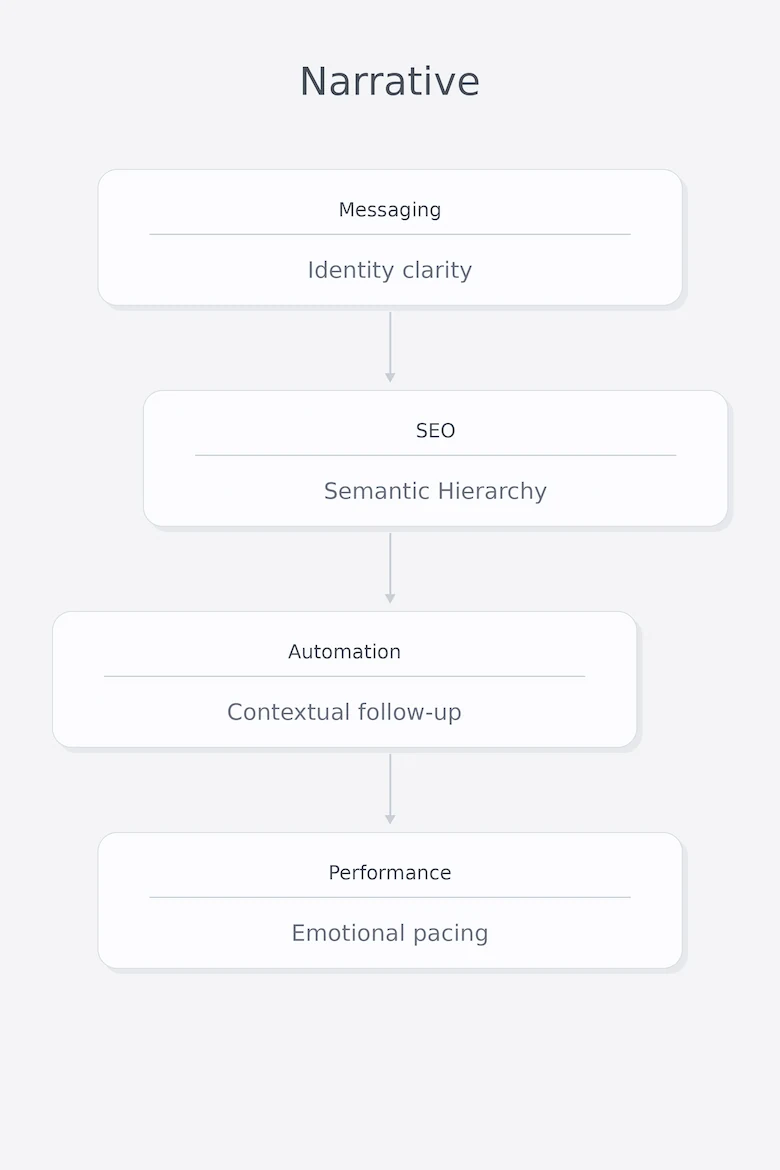
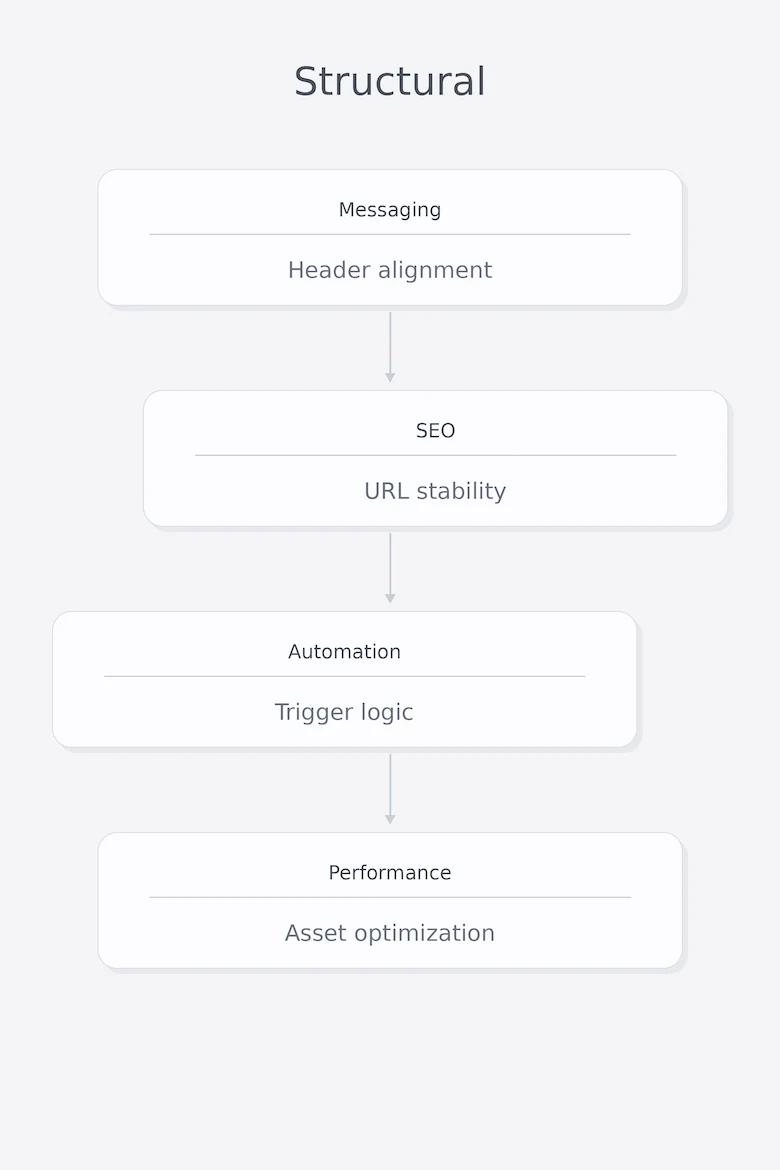
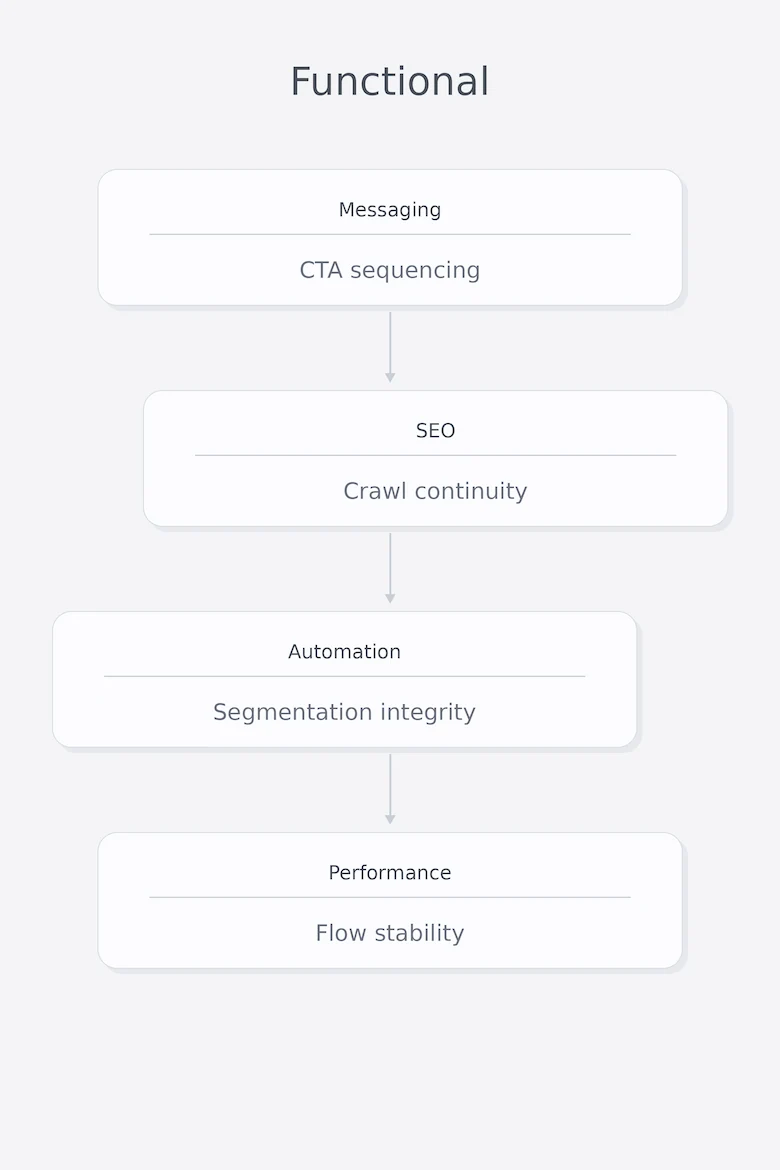
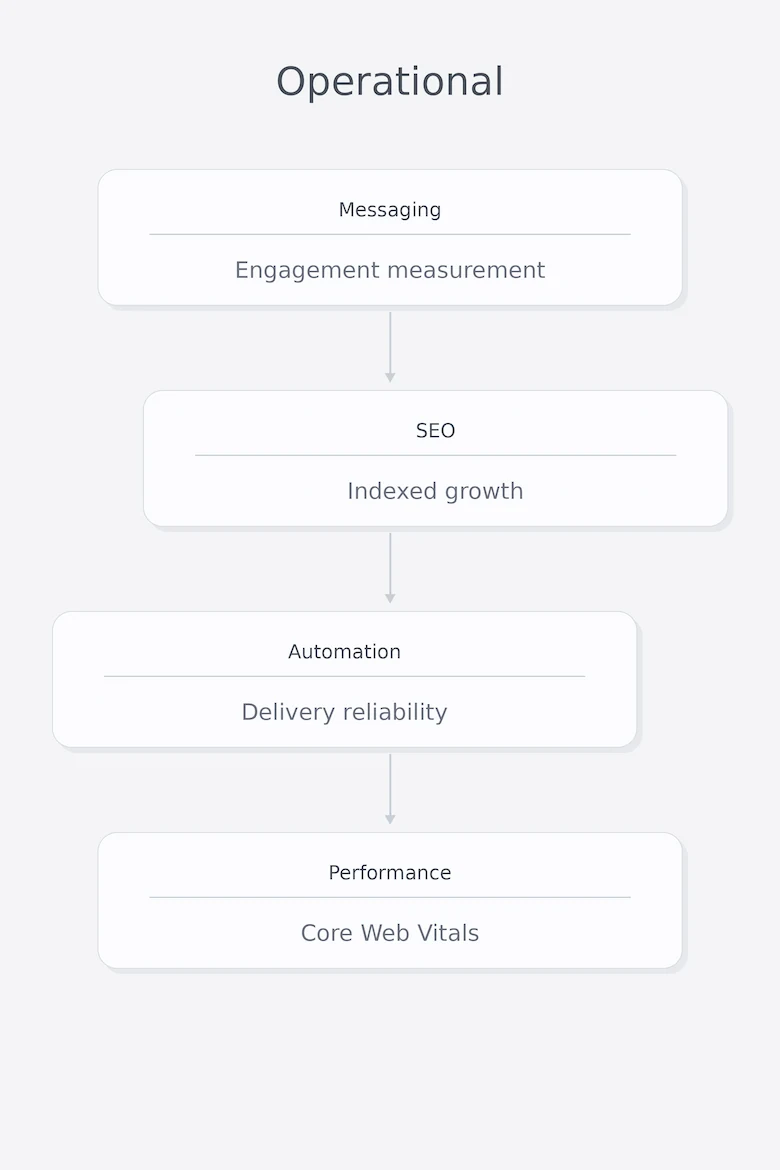
The earlier Digital Dove Media implementation approached this problem through a cross-layer evaluation model. Narrative, structural, functional, and operational considerations were examined together so that a change made in one area could be evaluated for its effects elsewhere. The original coherence matrix documented this relationship across messaging, SEO, automation, and performance rather than treating each as an independent optimization problem.
The current framework extends that principle further.
Alignment now asks whether what a system says, what it knows, what it presents, what it is capable of doing, and what actually happens remain consistent with one another.
That does not require every layer to perform the same function. They should not. Each layer has a distinct responsibility.
Coherence comes from those responsibilities remaining compatible with the same operational reality.
────────
A digital environment can appear polished at the surface while remaining fragmented underneath. Messaging can make promises that operations are not prepared to fulfill. Search can continue surfacing information that has become incomplete or outdated. Automation can execute against assumptions that no longer match the current state of the business. An interface can present choices that the underlying systems cannot reliably support.
These are not isolated failures.
They are alignment failures.
Alignment examines whether the major layers of the digital environment continue to describe and support the same underlying reality. Messaging establishes what is being communicated. Discoverability determines how that information is structured, surfaced, and interpreted. Automation carries information and intent into action. Experience determines how those capabilities are encountered. Operations determine what the organization and its systems can actually sustain.
When those layers drift apart, the system begins contradicting itself.
The earlier Digital Dove Media implementation approached this problem through a cross-layer evaluation model. Narrative, structural, functional, and operational considerations were examined together so that a change made in one area could be evaluated for its effects elsewhere. The original coherence matrix documented this relationship across messaging, SEO, automation, and performance rather than treating each as an independent optimization problem.
The current framework extends that principle further.
Alignment now asks whether what a system says, what it knows, what it presents, what it is capable of doing, and what actually happens remain consistent with one another.
That does not require every layer to perform the same function. They should not. Each layer has a distinct responsibility.
Coherence comes from those responsibilities remaining compatible with the same operational reality.
────────
A digital environment can appear polished at the surface while remaining fragmented underneath. Messaging can make promises that operations are not prepared to fulfill. Search can continue surfacing information that has become incomplete or outdated. Automation can execute against assumptions that no longer match the current state of the business. An interface can present choices that the underlying systems cannot reliably support.
These are not isolated failures.
They are alignment failures.
Alignment examines whether the major layers of the digital environment continue to describe and support the same underlying reality. Messaging establishes what is being communicated. Discoverability determines how that information is structured, surfaced, and interpreted. Automation carries information and intent into action. Experience determines how those capabilities are encountered. Operations determine what the organization and its systems can actually sustain.
When those layers drift apart, the system begins contradicting itself.
The earlier Digital Dove Media implementation approached this problem through a cross-layer evaluation model. Narrative, structural, functional, and operational considerations were examined together so that a change made in one area could be evaluated for its effects elsewhere. The original coherence matrix documented this relationship across messaging, SEO, automation, and performance rather than treating each as an independent optimization problem.
The current framework extends that principle further.
Alignment now asks whether what a system says, what it knows, what it presents, what it is capable of doing, and what actually happens remain consistent with one another.
That does not require every layer to perform the same function. They should not. Each layer has a distinct responsibility.
Coherence comes from those responsibilities remaining compatible with the same operational reality.
────────
Caption
The matrix illustrates how messaging, SEO structure, automation logic, and performance optimization reinforce one another across narrative, structural, functional, and operational layers.
────────────────────────
Caption
The matrix illustrates how messaging, SEO structure, automation logic, and performance optimization reinforce one another across narrative, structural, functional, and operational layers.
────────────────────────
The final exhibit examines how narrative, interface, automation, and operational systems were refined as a coherent whole.
────────────────────────
The final exhibit examines how narrative, interface, automation, and operational systems were refined as a coherent whole.
────────────
Enter Applied Alignment →
───────────────────────
───────────────────────
Caption
The matrix illustrates how messaging, SEO structure, automation logic, and performance optimization reinforce one another across narrative, structural, functional, and operational layers.
────────────────────────
OUTCOME
Systems Coherence
The Digital Dove Media platform ultimately became more than a completed digital implementation.
It became a practical case study in what happens when messaging, discoverability, interface design, automation, technical performance, and operational refinement are treated as connected parts of the same environment.
The measurable improvements remain an important part of that story.
Structural SEO work strengthened crawl integrity and index coverage. Broken links and 404 errors were eliminated.
Page performance improved substantially across desktop and mobile.
Those outcomes provide concrete evidence that deliberate structural and technical refinement changed the performance of the system rather than merely changing its appearance. The original case study recorded these results directly.
Outcome Snapshot
────────────────────────
SEO Integrity
67 → 99
Broken Links
11 → 0
404 Errors
6 → 0
Desktop Performance
3.0s → 1.8s
Mobile Performance
5.0s → 2.6s
────────────────────────
But the larger outcome was not contained in any individual score.
The project demonstrated that improvements become more durable when the relationships between system layers are considered alongside the components themselves. A change to structure can affect discoverability. A change to messaging can alter the experience. An automation decision can create consequences for both delivery and measurement. Performance work can influence whether an otherwise well-designed experience functions as intended.
That realization changed the nature of the project.
The objective was no longer simply to optimize individual parts of a digital platform. It became increasingly important to preserve the integrity of the environment as a whole.
Systems coherence became an outcome in its own right.
────────────────────────
The Digital Dove Media platform ultimately became more than a completed digital implementation.
It became a practical case study in what happens when messaging, discoverability, interface design, automation, technical performance, and operational refinement are treated as connected parts of the same environment.
The measurable improvements remain an important part of that story.
Structural SEO work strengthened crawl integrity and index coverage. Broken links and 404 errors were eliminated.
Page performance improved substantially across desktop and mobile.
Those outcomes provide concrete evidence that deliberate structural and technical refinement changed the performance of the system rather than merely changing its appearance. The original case study recorded these results directly.
Outcome Snapshot
────────────────────────
SEO Integrity
67 → 99
Broken Links
11 → 0
404 Errors
6 → 0
Desktop Performance
3.0s → 1.8s
Mobile Performance
5.0s → 2.6s
────────────────────────
But the larger outcome was not contained in any individual score.
The project demonstrated that improvements become more durable when the relationships between system layers are considered alongside the components themselves. A change to structure can affect discoverability. A change to messaging can alter the experience. An automation decision can create consequences for both delivery and measurement. Performance work can influence whether an otherwise well-designed experience functions as intended.
That realization changed the nature of the project.
The objective was no longer simply to optimize individual parts of a digital platform. It became increasingly important to preserve the integrity of the environment as a whole.
Systems coherence became an outcome in its own right.
────────────────────────
Framework Implications
────────────────────────
Framework Implications
────────────────────────
The Digital Narrative Infrastructure Model grew from those observations.
Its earliest form reflected the problems visible inside the original implementation: messaging needed structure, narrative needed continuity, automation needed context, interface decisions needed to support the intended experience, and operational feedback needed to inform what happened next.
As the work continued, the boundaries of the problem expanded.
Discoverability could no longer be understood only as traditional search optimization.
Digital information increasingly needed to be interpretable by search engines, retrieval systems, AI interfaces, and other machine intermediaries.
Automation was no longer limited to simple trigger sequences. Software systems were becoming increasingly capable of interpreting context and taking action.
Experience was expanding beyond the website itself as information moved through search results, AI responses, social platforms, commerce systems, messaging interfaces, and emerging agentic environments.
The framework therefore evolved from a model primarily concerned with coordinating a website and its supporting infrastructure into a broader way of thinking about digital
Modern digital environments now serve several kinds of participants simultaneously.
• People navigate and evaluate them.
• Search systems index them.
• AI systems interpret and retrieve their information.
• Platforms transform and distribute their content.
• Automations move information through workflows.
• Increasingly capable agents may also use that information to make decisions or initiate actions.
These participants encounter the system differently, but they depend on many of the same underlying conditions: clear meaning, reliable information, understandable structure, appropriate action, and consistency between what is represented and what actually exists.
That is why the framework is now organized around five interconnected domains::
Messaging, Discoverability, Automation, Experience, and Alignment.
The terminology has changed as the problem has become clearer, but the central principle has remained remarkably stable: digital systems become stronger when their components are designed as relationships rather than assembled as isolated capabilities.
The medium is changing.
The requirement for coherence is not.
────────────────────────
The Digital Narrative Infrastructure Model grew from those observations.
Its earliest form reflected the problems visible inside the original implementation: messaging needed structure, narrative needed continuity, automation needed context, interface decisions needed to support the intended experience, and operational feedback needed to inform what happened next.
As the work continued, the boundaries of the problem expanded.
Discoverability could no longer be understood only as traditional search optimization.
Digital information increasingly needed to be interpretable by search engines, retrieval systems, AI interfaces, and other machine intermediaries.
Automation was no longer limited to simple trigger sequences. Software systems were becoming increasingly capable of interpreting context and taking action.
Experience was expanding beyond the website itself as information moved through search results, AI responses, social platforms, commerce systems, messaging interfaces, and emerging agentic environments.
The framework therefore evolved from a model primarily concerned with coordinating a website and its supporting infrastructure into a broader way of thinking about digital
Modern digital environments now serve several kinds of participants simultaneously.
• People navigate and evaluate them.
• Search systems index them.
• AI systems interpret and retrieve their information.
• Platforms transform and distribute their content.
• Automations move information through workflows.
• Increasingly capable agents may also use that information to make decisions or initiate actions.
These participants encounter the system differently, but they depend on many of the same underlying conditions: clear meaning, reliable information, understandable structure, appropriate action, and consistency between what is represented and what actually exists.
That is why the framework is now organized around five interconnected domains::
Messaging, Discoverability, Automation, Experience, and Alignment.
The terminology has changed as the problem has become clearer, but the central principle has remained remarkably stable: digital systems become stronger when their components are designed as relationships rather than assembled as isolated capabilities.
The medium is changing.
The requirement for coherence is not.
────────────────────────
Stewardship Layer
Stewardship Layer
Documented and Preserved
A digital system does not retain much long-term value if the reasoning behind it disappears when the implementation changes.
Websites are replaced. Platforms are retired. Automations are rebuilt. Analytics environments change. Vendors disappear. Interfaces that once represented months of work can eventually survive only as screenshots.
For that reason, preservation became part of the Digital Dove Media project rather than something performed after the work was finished
.
The original implementation was archived across multiple forms of evidence, including
• Full web copy and metadata
• Automation workflows and segmentation logic
• Payment configurations
• Analytics and performance records
• SEO structure
• Sitemap documentation
• Visual and interface assets
Those materials were organized so the architecture and significant implementation decisions could be reconstructed later rather than remembered only informally.
That distinction matters.
Execution demonstrates what a system was capable of doing at a particular moment. Documentation preserves the reasoning, relationships, configurations, and evidence that explain how it came to operate that way.
Together, they create continuity.
Preservation was treated as part of system design, not an afterthought.
The ability to return to earlier states of the project, examine what changed, compare assumptions against results, and recover the thinking behind an implementation became increasingly valuable as the framework itself evolved.
Preservation was therefore not simply archival housekeeping.
It became part of system stewardship: maintaining enough context and evidence that the work could remain understandable after the technologies, interfaces, and implementations around it had changed.
────────────────────────
A digital system does not retain much long-term value if the reasoning behind it disappears when the implementation changes.
Websites are replaced. Platforms are retired. Automations are rebuilt. Analytics environments change. Vendors disappear. Interfaces that once represented months of work can eventually survive only as screenshots.
For that reason, preservation became part of the Digital Dove Media project rather than something performed after the work was finished
.
The original implementation was archived across multiple forms of evidence, including
• Full web copy and metadata
• Automation workflows and segmentation logic
• Payment configurations
• Analytics and performance records
• SEO structure
• Sitemap documentation
• Visual and interface assets
Those materials were organized so the architecture and significant implementation decisions could be reconstructed later rather than remembered only informally.
That distinction matters.
Execution demonstrates what a system was capable of doing at a particular moment. Documentation preserves the reasoning, relationships, configurations, and evidence that explain how it came to operate that way.
Together, they create continuity.
Preservation was treated as part of system design, not an afterthought.
The ability to return to earlier states of the project, examine what changed, compare assumptions against results, and recover the thinking behind an implementation became increasingly valuable as the framework itself evolved.
Preservation was therefore not simply archival housekeeping.
It became part of system stewardship: maintaining enough context and evidence that the work could remain understandable after the technologies, interfaces, and implementations around it had changed.
────────────────────────
Final
Final
The Result
The project began as the design and development of a digital platform.
Over time, it became something more useful: a working environment in which the relationships between communication, information structure, discoverability, automation, user experience, performance, measurement, and operations could be observed directly.
Designed intentionally.
Implemented deliberately.
Refined through measurable feedback.
Preserved systematically.
The system was implemented, tested, measured, corrected, and documented through repeated cycles of refinement.
Some of those changes produced immediately visible results, such as stronger performance, improved crawl integrity, broader index coverage, and the elimination of structural errors. Others produced a deeper understanding of how seemingly separate digital disciplines influence one another.
That distinction became important.
A website can be improved without becoming a coherent system.
Individual pages can perform well while the larger environment remains fragmented.
Automations can function correctly while carrying inconsistent information.
Search visibility can increase without improving understanding.
Interfaces can become more polished while drifting further from operational reality.
The Digital Dove Media project gradually became an exploration of how those failures could be avoided.
What emerged was the recognition that the quality of a digital environment depends not only on the quality of its individual components, but on the integrity of the relationships between them.
That insight eventually became the foundation of the broader framework documented throughout this portfolio.
Today, the technologies surrounding that framework are changing quickly. Search is becoming increasingly mediated by AI. Commerce is becoming more distributed. Automation is becoming more capable. Software agents are beginning to interpret information and act across systems. Human experiences increasingly begin outside the websites organizations actually own.
Those changes expand the architecture, but they do not overturn the lesson learned through the original project.
They make it more consequential.
A modern digital system must communicate clearly enough to be understood, structure information well enough to be discovered, connect systems intelligently enough to support appropriate action, create experiences that preserve context, and remain aligned with the operational reality beneath the surface.
That kind of coherence rarely emerges accidentally.
It has to be designed.
Designed and built independently by
Justin David McMillen
Digital Dove Media LLC
Explore the full CV or download a PDF copy.
────────────────────────
The project began as the design and development of a digital platform.
Over time, it became something more useful: a working environment in which the relationships between communication, information structure, discoverability, automation, user experience, performance, measurement, and operations could be observed directly.
Designed intentionally.
Implemented deliberately.
Refined through measurable feedback.
Preserved systematically.
The system was implemented, tested, measured, corrected, and documented through repeated cycles of refinement.
Some of those changes produced immediately visible results, such as stronger performance, improved crawl integrity, broader index coverage, and the elimination of structural errors. Others produced a deeper understanding of how seemingly separate digital disciplines influence one another.
That distinction became important.
A website can be improved without becoming a coherent system.
Individual pages can perform well while the larger environment remains fragmented.
Automations can function correctly while carrying inconsistent information.
Search visibility can increase without improving understanding.
Interfaces can become more polished while drifting further from operational reality.
The Digital Dove Media project gradually became an exploration of how those failures could be avoided.
What emerged was the recognition that the quality of a digital environment depends not only on the quality of its individual components, but on the integrity of the relationships between them.
That insight eventually became the foundation of the broader framework documented throughout this portfolio.
Today, the technologies surrounding that framework are changing quickly. Search is becoming increasingly mediated by AI. Commerce is becoming more distributed. Automation is becoming more capable. Software agents are beginning to interpret information and act across systems. Human experiences increasingly begin outside the websites organizations actually own.
Those changes expand the architecture, but they do not overturn the lesson learned through the original project.
They make it more consequential.
A modern digital system must communicate clearly enough to be understood, structure information well enough to be discovered, connect systems intelligently enough to support appropriate action, create experiences that preserve context, and remain aligned with the operational reality beneath the surface.
That kind of coherence rarely emerges accidentally.
It has to be designed.
Designed and built independently by
Justin David McMillen
Digital Dove Media LLC
Explore the full CV or download a PDF copy.
────────────────────────
View CV & Contact Details→
ABOUT THE BUILDER
The work is technical. The thinking behind it is deeply human.
The work is technical. The thinking behind it is deeply human.
Continue to About →