Exhibit V of V

Applied Alignment


Purpose


Demonstrate cross-layer coherence where narrative, interface, functional systems, and operational processes reinforce one another.

Demonstrate cross-layer coherence where narrative, interface, functional systems, and operational processes reinforce one another.

System Method


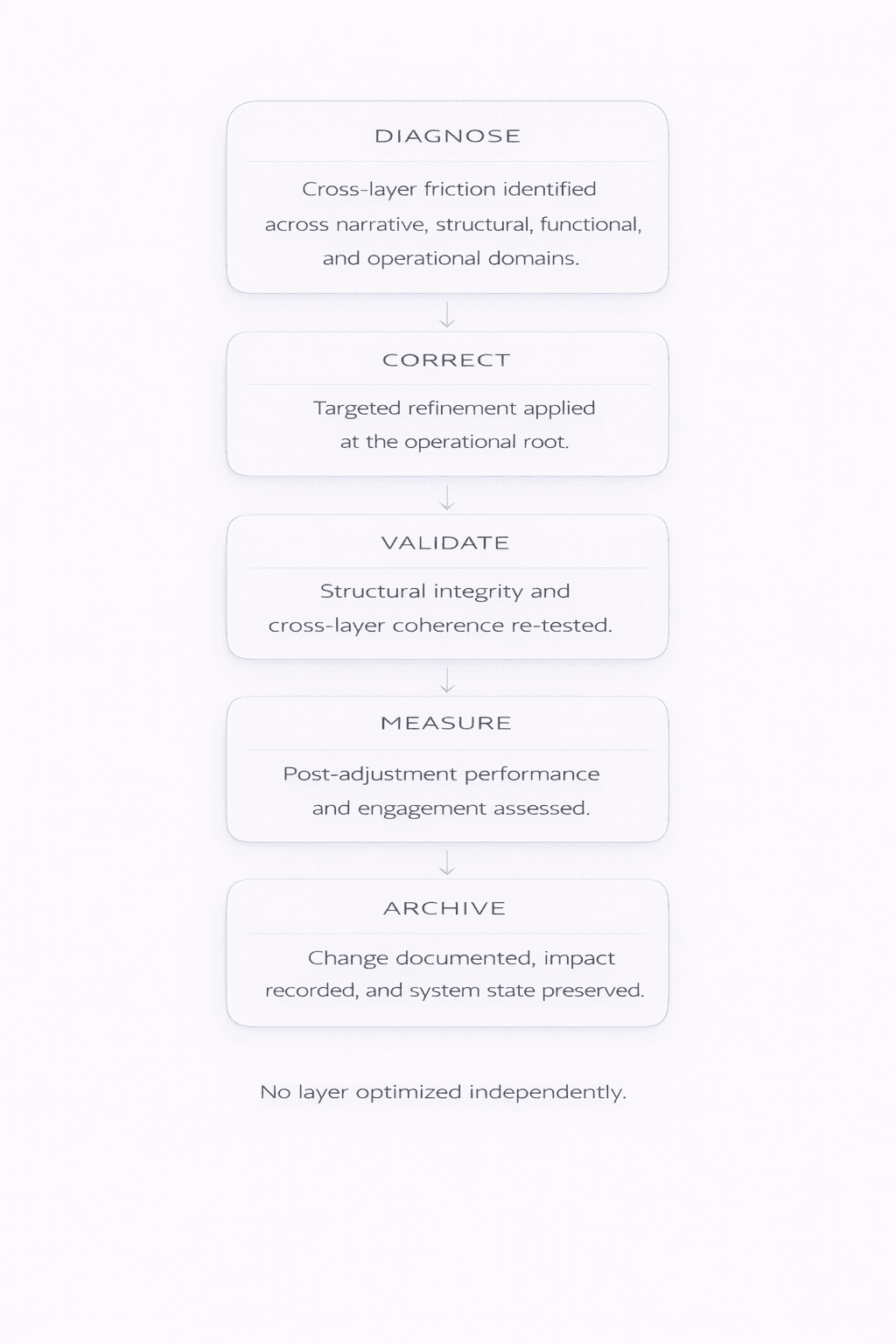
Optimization followed a structured diagnostic process to ensure changes strengthened the system holistically rather than optimizing isolated components.


Optimization Method Model
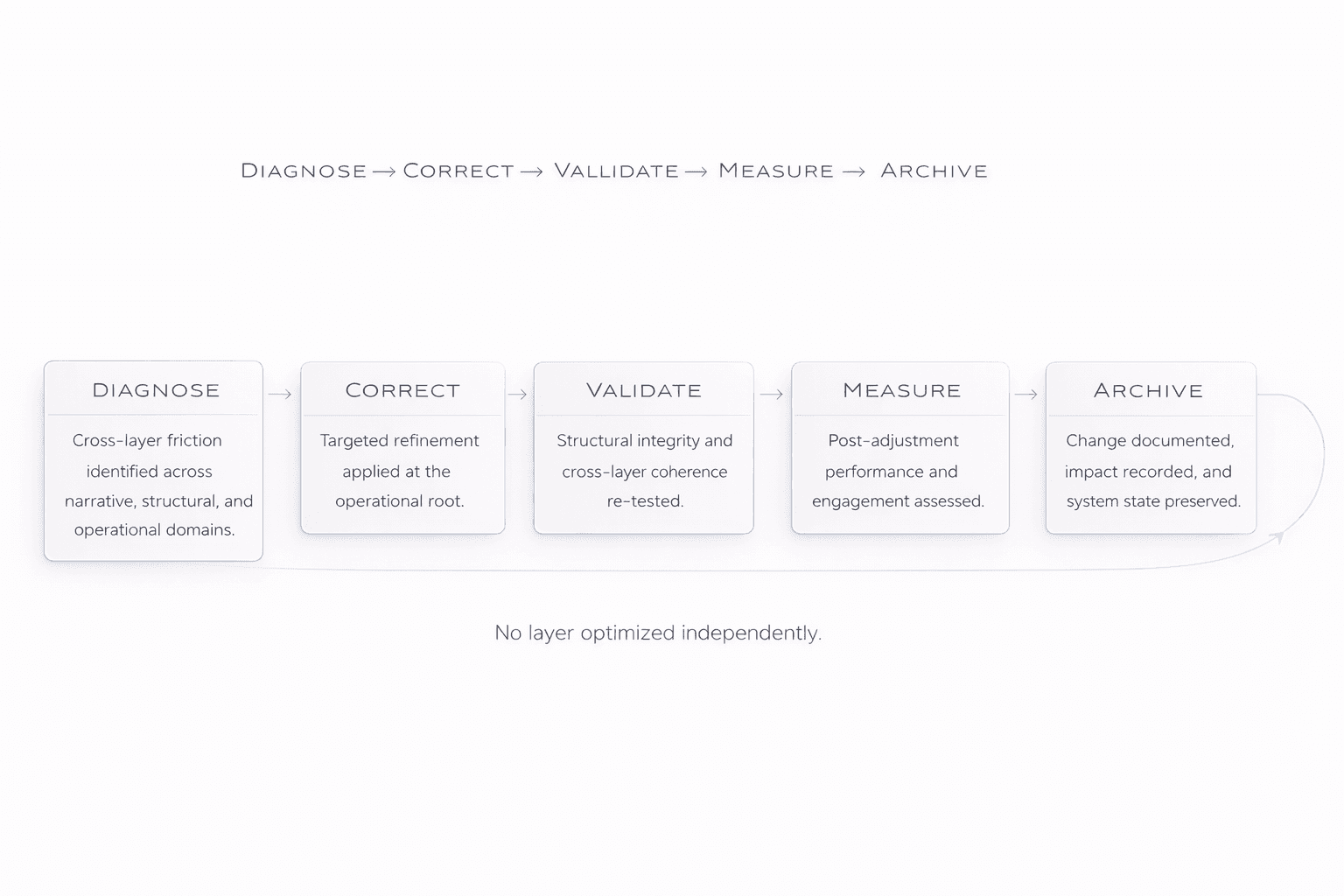


The model illustrates the structured diagnostic cycle used to evaluate system performance, implement targeted corrections, validate outcomes, and archive improvements for future reference.


The model illustrates the structured diagnostic cycle used to evaluate system performance, implement targeted corrections, validate outcomes, and archive improvements for future reference.


Ripple Example - Performance Optimization


Operational change:


Image Compression + Caching Refinement


Cross-layer Impact:


  • Preserved emotional pacing


  • Extended engagement duration


  • Improved PSI scores


  • Reinforced structural credibility


This example illustrates how a technical optimization produced ripple effects across narrative pacing, engagement behavior, and system credibility.


Validation Signals


Observed behavioral indicators reflected system alignment:


  • Increased engagement duration


  • Returning user behavior


  • Sustained interaction within long-form sections


Messaging continued to guide both cognition and immersion throughout the optimized system.


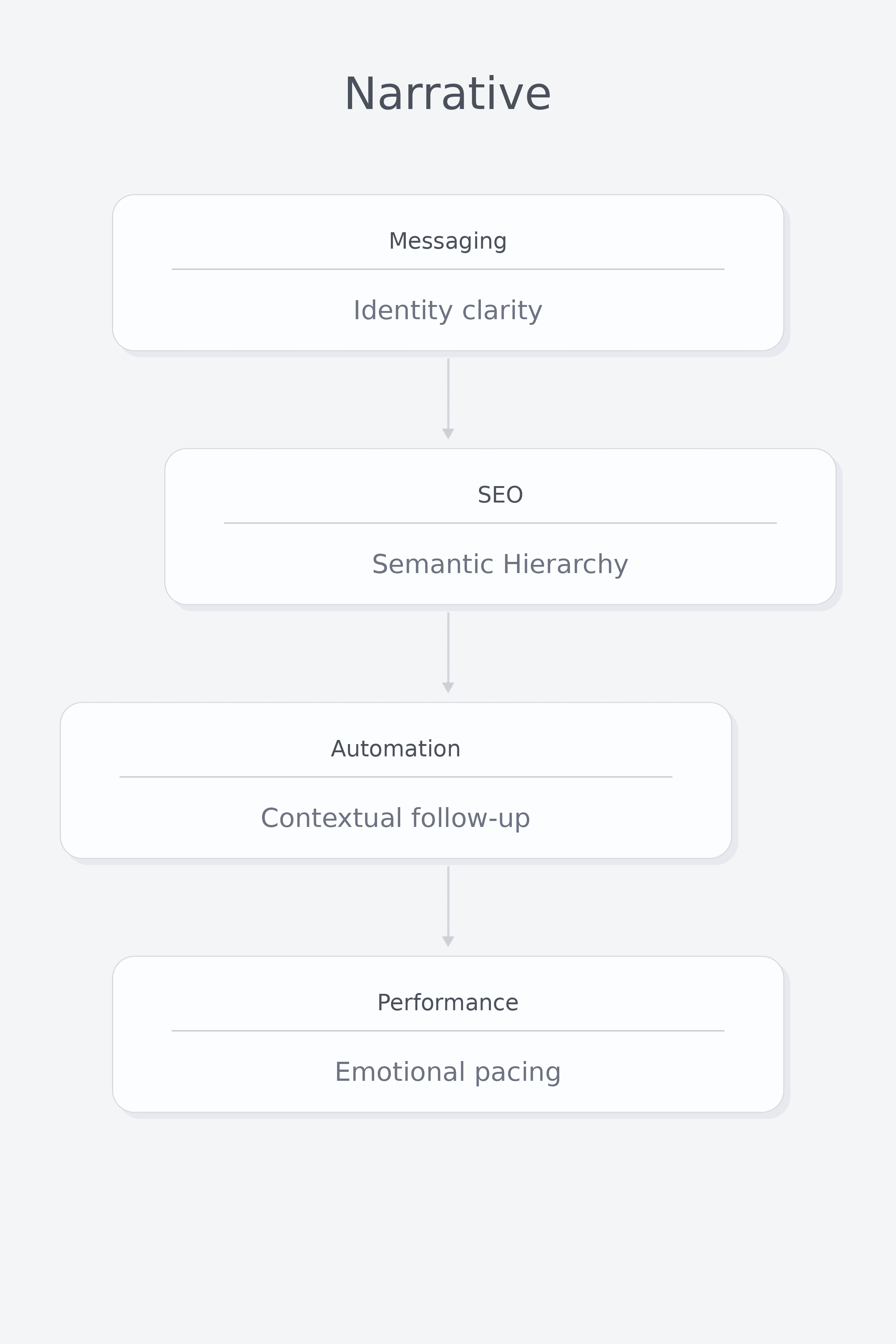
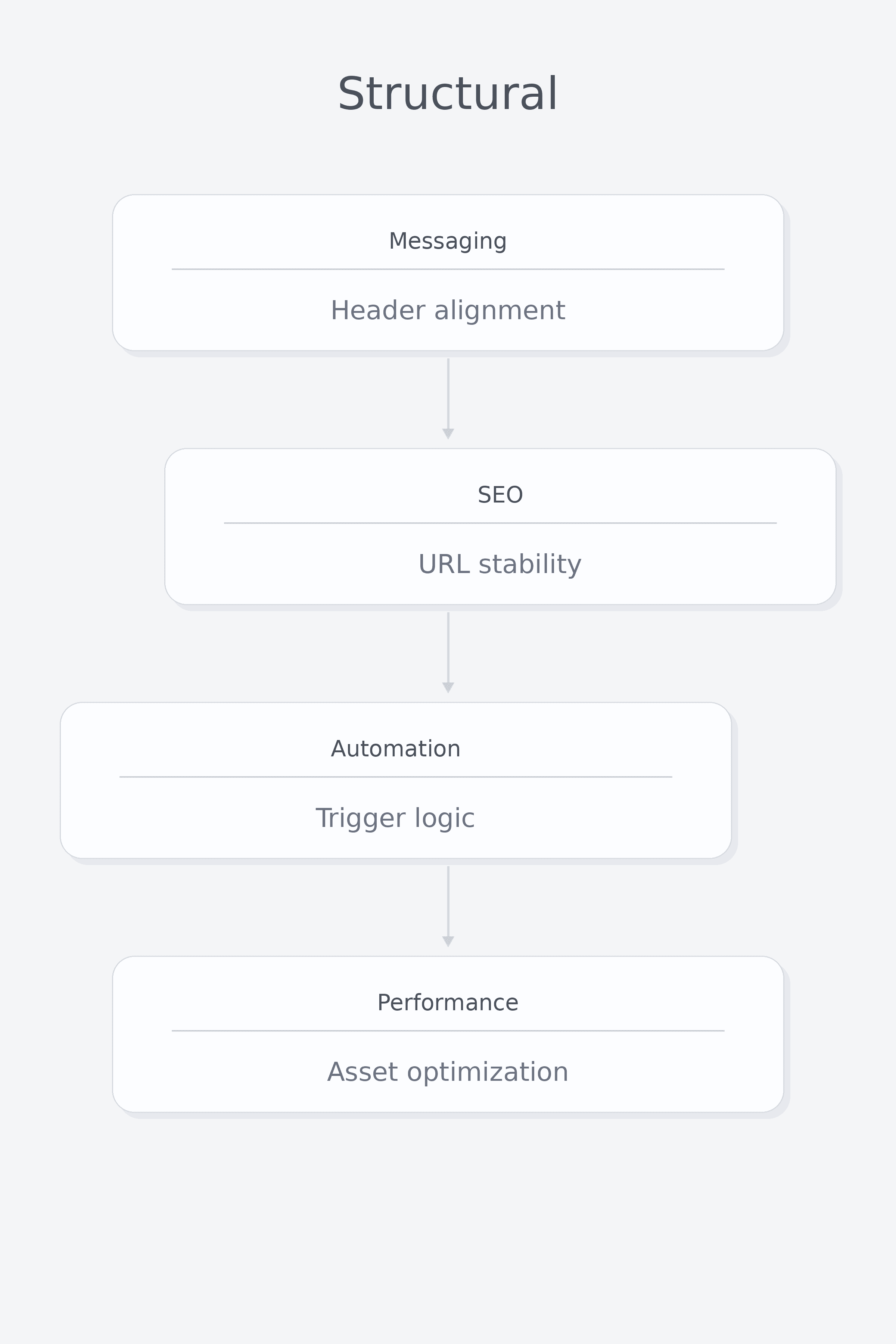
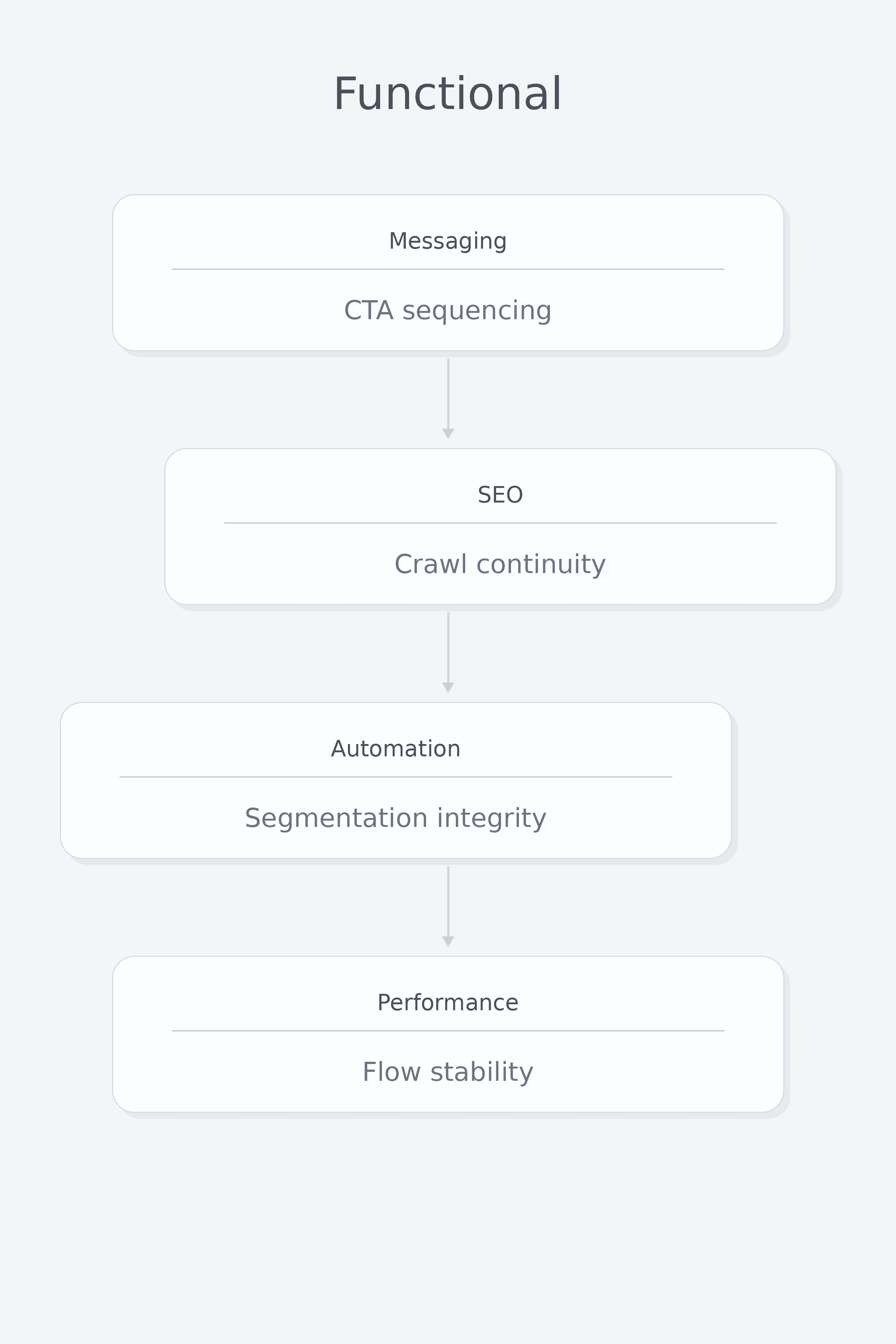
Cross-Layer Matrix
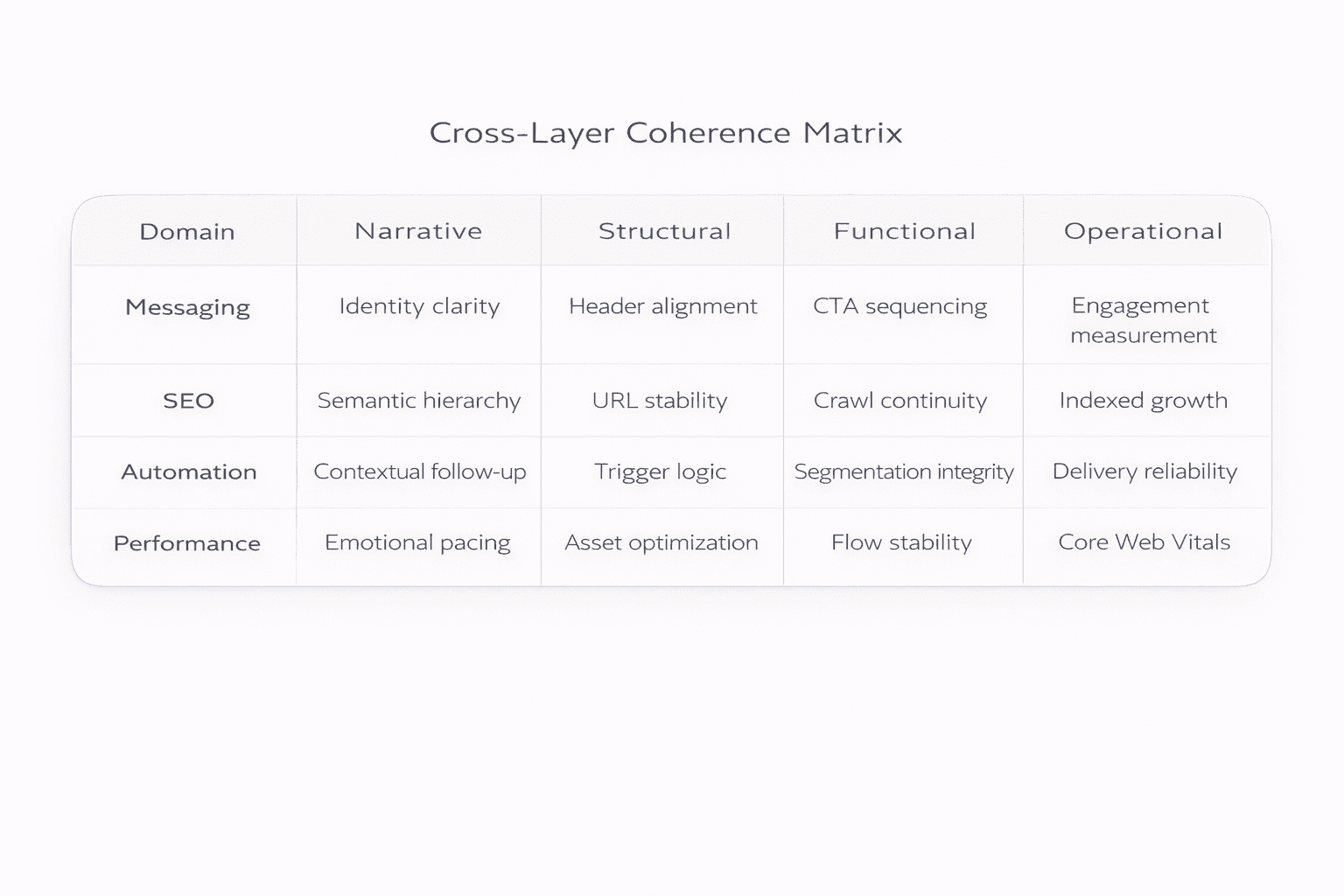


The matrix illustrates how messaging, interface design, system infrastructure, and operational optimization interact to reinforce system coherence rather than functioning as isolated elements.


The matrix illustrates how messaging, interface design, system infrastructure, and operational optimization interact to reinforce system coherence rather than functioning as isolated elements.


Operational alignment ensured that optimization strengthened the system holistically rather than improving isolated components.


Operational alignment ensured that optimization strengthened the system holistically rather than improving isolated components independently.


Operational alignment ensured that optimization strengthened the system holistically rather than improving isolated components independently.


Operational alignment ensured that optimization strengthened the system holistically rather than improving isolated components.


Reflection


Alignment is where system design becomes operational reality.


At this stage, messaging architecture, discoverability systems, user experience design, and automation infrastructure begin functioning together as a coordinated environment rather than independent components.


When these layers reinforce one another, the digital ecosystem becomes easier to navigate, easier to maintain, and more resilient to change.


This final layer demonstrates how structured alignment allows complex digital systems to operate with clarity and stability.


The portfolio now returns to the documented architecture where the system is preserved as a complete operational record.


────────────────────────


Reflection


Alignment is where system design becomes operational reality.


At this stage, messaging architecture, discoverability systems, user experience design, and automation infrastructure begin functioning together as a coordinated environment rather than independent components.


When these layers reinforce one another, the digital ecosystem becomes easier to navigate, easier to maintain, and more resilient to change.


This final layer demonstrates how structured alignment allows complex digital systems to operate with clarity and stability.


The portfolio now returns to the documented architecture where the system is preserved as a complete operational record.


────────────────────────


Return to Outcome & Documentation →