Strategic Premise
The interface was designed as a visual translation of the messaging architecture.
Rather than functioning as a static layout, the experience was structured to guide attention, pacing, and immersion as users progressed through the narrative system.
Interface structure governed:
Scroll rhythm
Typographic hierarchy
CTA restraint
Visual pacing
Accessibility compliance
Each section was intentionally sequenced to maintain cognitive clarity while allowing deeper narrative engagement.
Experience Architecture
Interface structure translated narrative escalation into visual choreography.
The experience progressed through three primary interaction layers:
Orientation Layer
Initial sections established context and clarity through restrained visual hierarchy and concise messaging.
This stage focused on:
rapid comprehension
visual calm
trust establishment
Immersion Layer
Mid-page sections increased narrative depth while introducing richer visual assets.
This layer introduced:
structured long-form content
contextual visuals
progressive conceptual framing
The goal was to sustain attention without overwhelming the reader.
Invitation Layer
Final sections transitioned from narrative immersion toward optional engagement.
Calls-to-action were intentionally restrained to maintain trust and avoid disrupting the narrative flow.
CTA placement prioritized:
contextual relevance
visual clarity
minimal cognitive interruption
This interaction structure is represented in the Experience Progression Model below.
Experience Progression Model
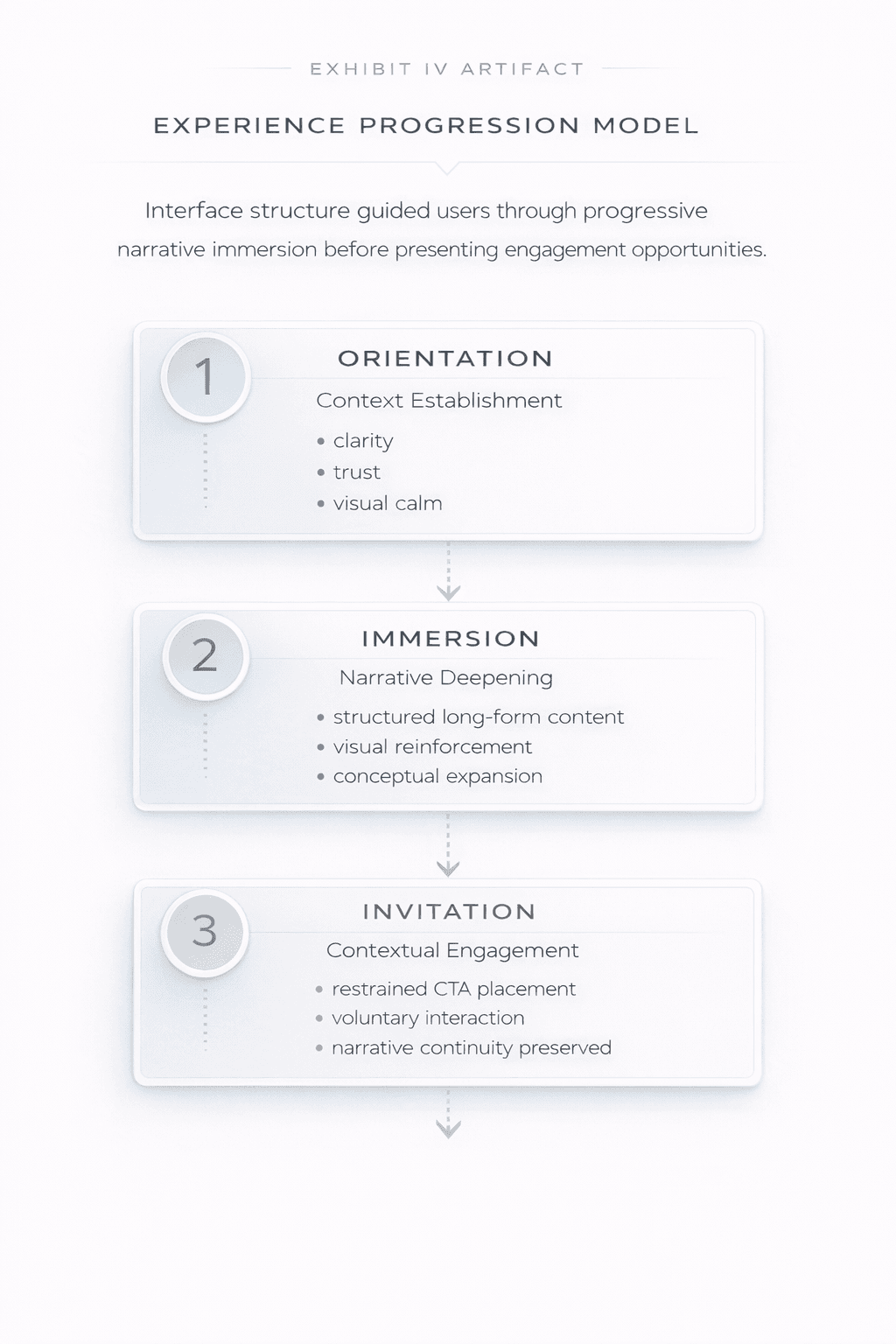
The diagram illustrates how interface structure guides users from orientation through immersion toward invitation-based engagement, preserving narrative pacing while maintaining cognitive clarity.
Experience Structure & Visual Pacing Governance Model
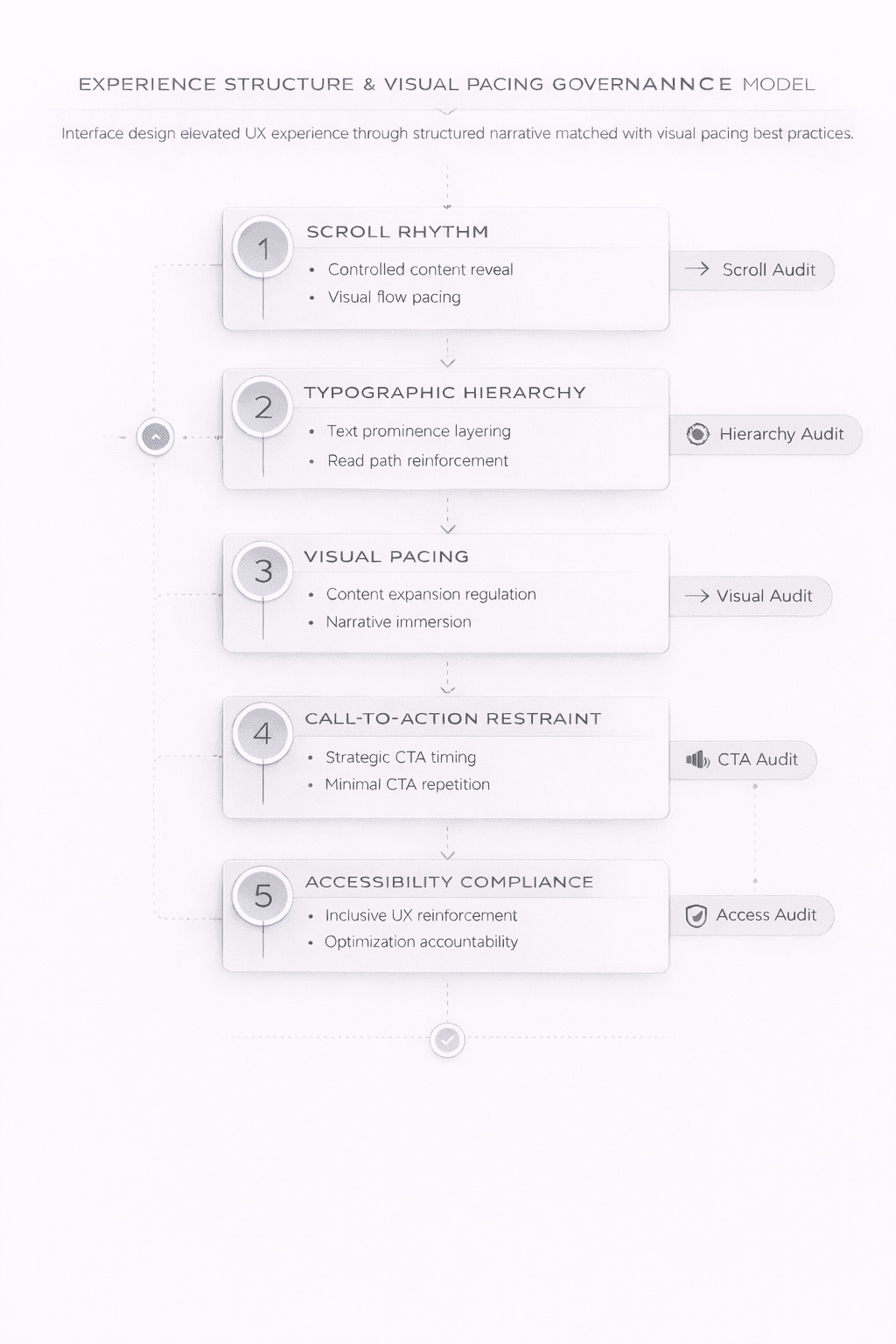
This model illustrates how scroll rhythm, typographic hierarchy, and restrained calls-to-action were coordinated to sustain visual pacing and narrative continuity across the interface.
Behavioral Signals
Observed engagement indicators reflected system alignment:
Increased session duration
Increased returning users
Sustained interaction across long-form sections
Interface clarity sustained narrative immersion.
Experience architecture therefore functions as the translation layer between narrative strategy and operational systems.
Return to Automation Infrastructure →